
Breeder life & families · a better conversation
Ask puppy families about their daily routine
How to talk with families about their daily routine.
Ask about Tuesday.
A puppy has to fit into an ordinary day, too. Ask how that day works, who can help, and what happens when the plan falls apart a little.
Make a conversation sheet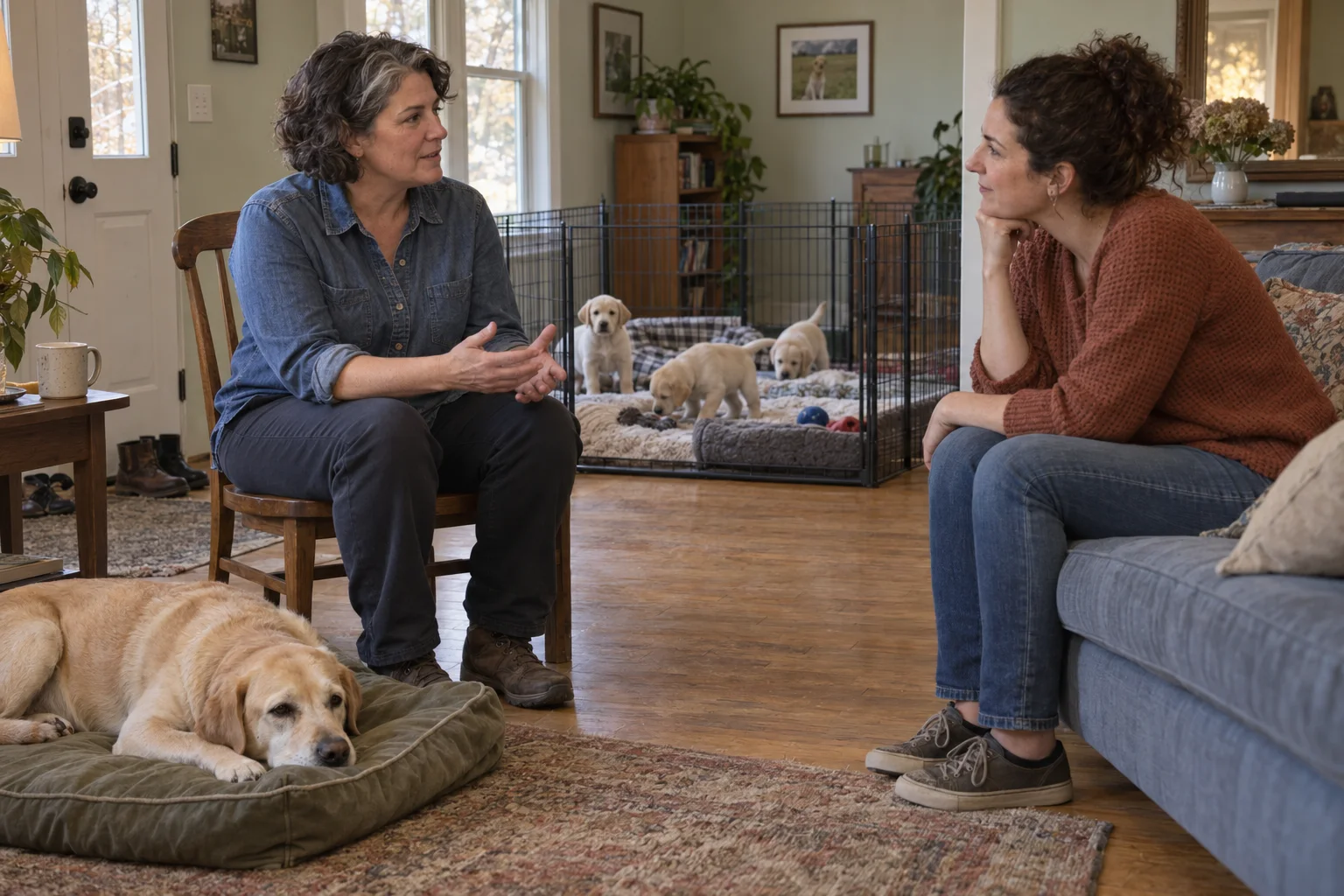
Let them tell you how life works.
Try: “Walk me through a normal weekday at your house, from getting up to going to bed.” Then give them a little room to answer.
You’re listening for the shape of the day: departures, returns, meals, school runs, quiet stretches and the moments when everybody needs something at once. You don’t need a beautifully laminated schedule. You need to understand where a puppy’s care could actually happen.
The AKC’s breeder guidance asks who will provide care and whether the family has time for feeding, training and exercise. Turning those broad questions into a walk through the day makes the details easier to discuss. AKC guidance ↗
If their week varies, ask about the day with the longest absence as well as the easier one. “We work from home” is a start. “I can step away between calls, but not during the afternoon clinic” tells you something you can work with.
Reference sheet 01 · keep the conversation moving
Swap the broad question
for a useful follow-up.
A yes or no can settle a detail. An open question helps you find the detail worth settling.
| The broad question | A follow-up that goes somewhere |
|---|---|
| TimeAre you home during the day? | Walk me through the stretch between leaving and getting back. Who can pause for puppy care, and when? Include commuting, meetings and errands. |
| CareWill everyone help? | Who will handle the first trip outside on a workday? Name the person for the ordinary job, then the person who can cover. |
| SpaceDo you have a yard? | How would you get a puppy outside from where you live? Think about doors, stairs, shared spaces and getting out in bad weather. |
| EnergyAre you an active family? | What did you do after work yesterday? Leave room for the dog’s exercise, training and rest alongside the family’s plans. |
| UpkeepAre you ready for the grooming? | Where would coat care fit into your week? Talk through the actual work this breed needs and any help the family would use. |
| ChangeDo you have a backup? | What happens if your usual helper can’t come? Check availability, access and any cost before relying on the arrangement. |
Original Good Harbor conversation prompts. The open-then-specific approach draws on Conner’s client-communication chapter, pp.6–7; these questions are a discussion aid. Read the source note ↗
Start openly. Finish specifically.
Once you’ve heard the answer, ask for the missing piece: which person, which part of the day, what access, what help. You can be warm and still be clear.
Try “Who could do that on your late-shift days?” rather than “You wouldn’t leave a puppy all day, would you?” One invites a plan. The other rather hands over the answer.
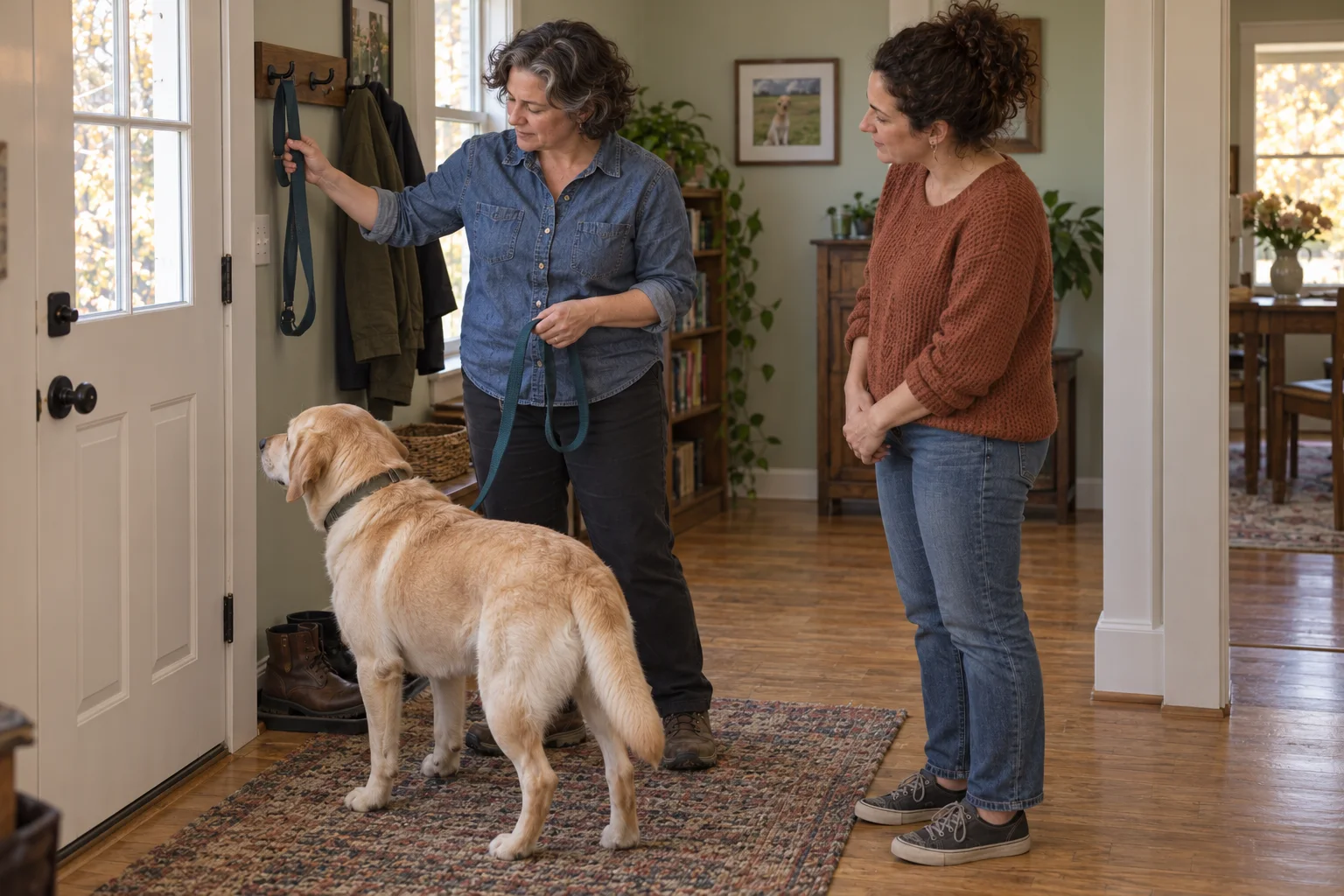
Plans meet real life
Ask about the awkward bits.
What happens when the usual helper is ill, the commute runs late, or the school calls? A backup is useful only if that person is willing and available. If care will be paid for, ask whether the family has checked the service, availability and cost.
Dogs Trust’s working-owner advice includes care arrangements and what happens if circumstances change. It also points out that puppies need time and supervision for house training. A job title alone doesn’t tell you how care will be covered. Dogs Trust guidance ↗
Don’t stop at the first week of leave. Ask what happens when that leave ends. A generous welcome-home week is lovely; the following Tuesday still needs a plan.
Ask who can help, then listen to the limits.
A grandparent who enjoys an afternoon visit may not want the morning shift. A teenager’s enthusiasm can sit alongside an adult’s responsibility. Talk with the people who will actually provide care, including anyone whose availability the plan depends on.
“Someone is home” needs one more question.
Can that person interrupt what they’re doing to care for a puppy? Being in the building and being available are different details. Ask about both without asking the family to defend their work or household.
Bring the dog into the discussion
Put their day beside this puppy’s needs.
Tell the family what you currently see: how the puppy rests, seeks company, plays and responds to everyday handling. Date those observations and leave room for change in a new home. An observation today isn’t a promise about an adult dog.
Be specific about the work that comes with the breed, too. Coat care and exercise need somewhere to go in the week. Ask which parts the family is looking forward to and which parts they’d want help with.
Company matters, and dogs differ in how they cope when people are away. Don’t turn a single number of hours into a guarantee that a puppy will be comfortable. If the conversation raises a behavior or health concern, bring in the veterinarian or an appropriately qualified behavior professional. RSPCA guidance ↗ Clinical history and assessment ↗
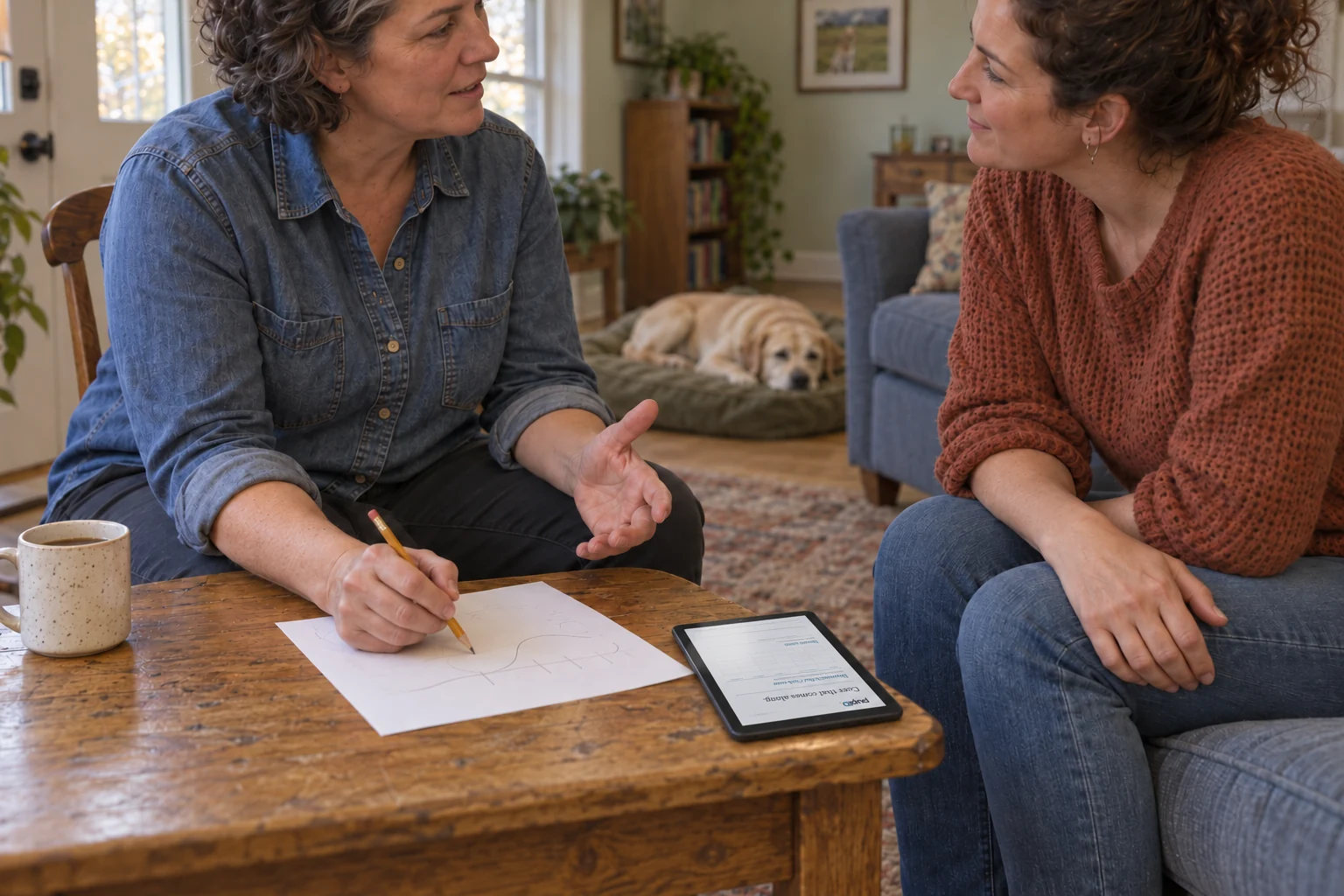
Reference sheet 02 · a shared picture of the day
Write down the plan.
Leave the unknowns visible.
Use this together, or take the blank sheet into your next conversation. A few clear notes are enough: who, what happens, and what still needs sorting out.
An ordinary day with a puppy
Conversation notes · Date: ________________
Keep the useful care details. There’s no need to record unrelated private family information.
Notes stay on this page until you leave or reload. Download a copy to keep them; this sheet doesn’t save to an account.
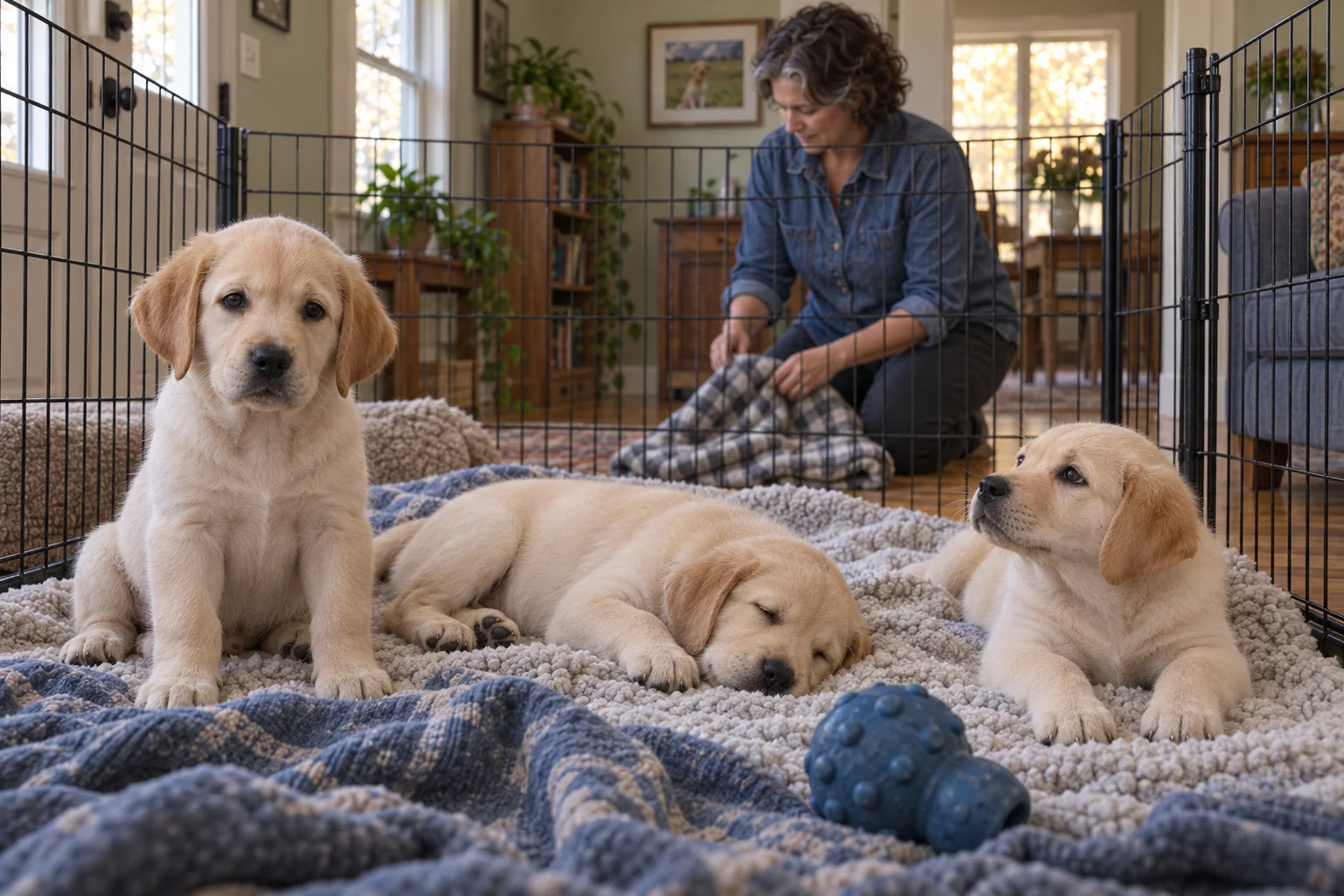
Finish with something concrete
Agree on what comes next.
Say back what you’ve understood. Name the arrangement that needs confirming, the question you’ll investigate, or the reason this puppy’s needs may call for a different plan.
If there’s a real gap, be direct about it. “Who will cover the afternoon?” is a fair question to leave open until there’s an answer. You don’t have to smooth it over to keep the conversation friendly.
The useful result is a clearer picture of the family’s day and an honest next step. They can leave knowing what you’ve heard—and what the two of you still need to work out.
Read further
The sources behind the questions.
Welfare guidance and professional communication references inform this article. The two sheets are original Good Harbor tools; no source establishes a placement score or guarantees a match.
- American Kennel Club
Guide to Responsible Dog Breeding ↗
The placement section asks about care responsibility, available time and breed needs. Undated web guidance; US breeder context.
- Dogs Trust
Getting a dog when working full time ↗
Practical care coverage, puppy supervision and changing circumstances. UK welfare guidance; each dog’s needs differ.
- Merck Veterinary Manual
Diagnosis of Behavior Problems in Animals ↗
Katherine Pankratz; reviewed September 2024, updated June 2025. The clinical history includes daily schedules and variation. That principle informs these questions; this article does not diagnose behavior.
- Bobbi J. Conner · CRC Press
Client Communication ↗
Clinical Medicine of the Dog and Cat, 4th edition (2023), chapter 1, pp.6–7. Professional teaching on beginning openly and clarifying details; adapted here for a breeder conversation.
- RSPCA
Keeping your dog company ↗
General welfare guidance on companionship and individual coping. This article sets no universal alone-time allowance.
A little more on the research
Research on separation-related problems describes different presentations and uses different populations and definitions. A 2020 survey analysis concerned dogs older than six months already showing signs; it cannot set an alone-time allowance for a new puppy. de Assis and colleagues, 2020 ↗
A later exploratory Generation Pup analysis followed 145 dogs to six months. Its associations do not prove that a particular household routine prevents problems. This article therefore asks about care coverage and changing circumstances without prescribing a training schedule. Dale and colleagues, 2024 ↗
The accessible textbook preview includes the communication discussion used here: Conner, chapter 1, printed pp.6–7 ↗.
Finished reading?
Keep track of the guides you’ve explored.
Sources checked October 10, 2026.