
Breeder life & families · a promise you can keep
Offer breeder support with clear boundaries
Offer useful support without promising an instant reply.
Be helpful. Put the phone down.
Families need to know they can ask you something. They also need to know how to reach you, what help you can offer and where a concern belongs when waiting would be the wrong next step.
Write your support expectations ↓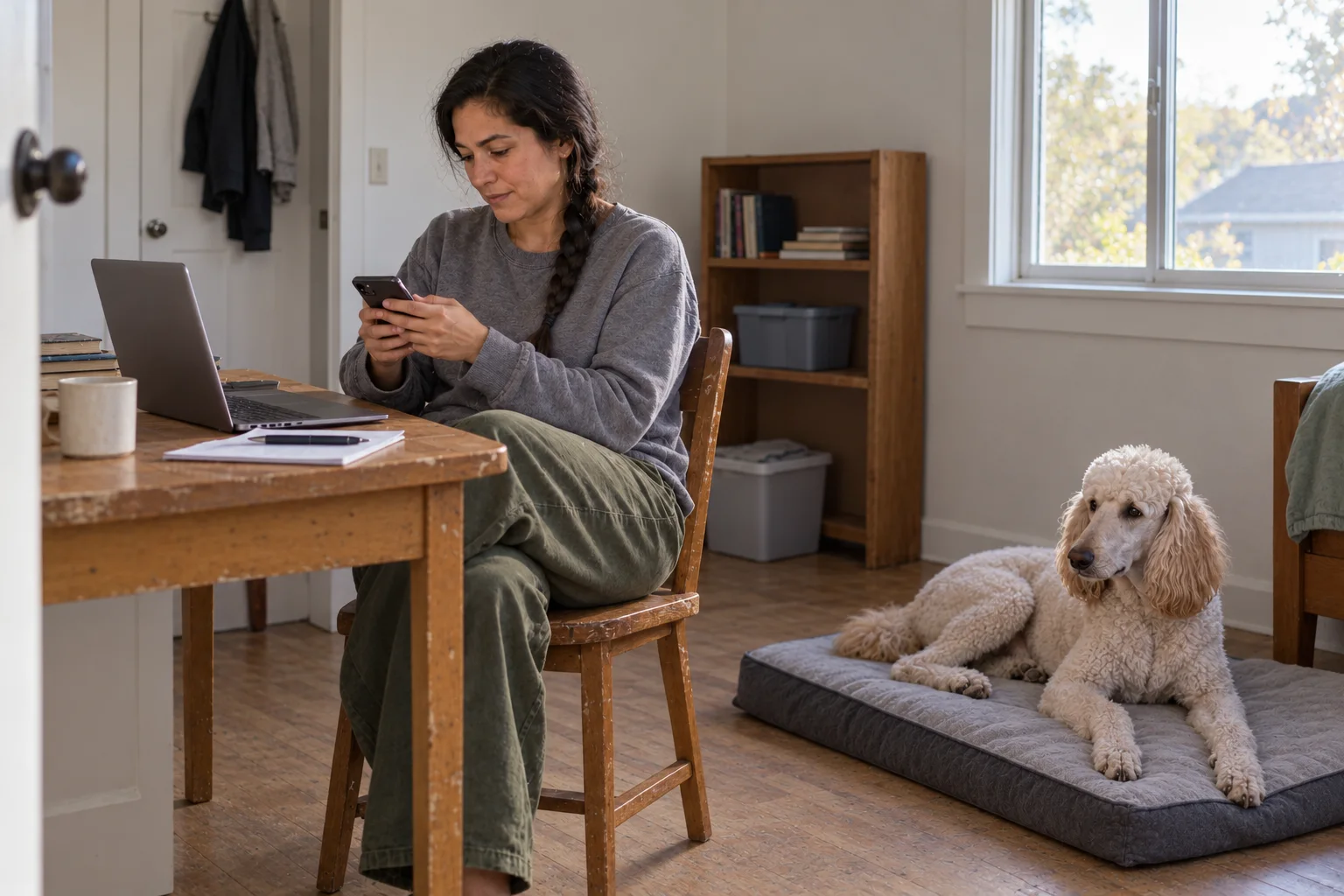
Start with the help you can reliably give.
“Please keep in touch” is warm. It leaves quite a few practical questions unanswered. Should the family text, email or call? Are you likely to see a message that evening or later in the week? What happens while you’re away? Tell them before they have to guess.
Choose the channel you actually check and a response window you can honor. Write it in ordinary language. You don’t need to sound like a customer-service department; you need to describe a working arrangement. If you can offer calls by agreement, say how to arrange one.
The AKC encourages breeders to remain a resource throughout their dogs’ lives. A useful way to put that commitment into practice is to make your role and contact arrangements clear. Lifelong support guidance ↗
Leave room to change the arrangement honestly. If your availability changes, give families the new version. It is easier to trust a modest promise that keeps working than an expansive one that quietly stops being true.
Reference sheet 01 · help the question reach the right place
What can you answer?
Who else needs to be involved?
This map describes roles. It does not ask a family to diagnose their dog before seeking help.
| What to record | Keep this distinction |
|---|---|
| A question about the dog’s earlier routine | You can share what you know. Give dated observations and the instructions you supplied. Ask what has changed in the new household before assuming the old routine still fits. |
| A nonurgent practical question | Use the agreed contact channel. Tell the family how to reach you and when you usually respond. A call can be arranged when a message would leave too much to explain. |
| A health concern or possible emergency | Contact a veterinary service directly. The family should use their veterinary practice or appropriate out-of-hours service. Your inbox must not become the step they wait through first. |
| A behavior concern that needs assessment | Help the family find qualified support. A veterinarian can consider health causes and appropriate referral. A short message or video cannot establish the whole picture. |
| A difficult change in the family’s circumstances | Make it easy to tell you early. Explain how to contact you about care difficulties or placement concerns. Discuss the actual agreement and options without promising a result you cannot provide. |
Original Good Harbor contact-routing reference. No response-time benchmark or clinical decision rule is implied.

Offer a check-in people can actually use.
A planned conversation can make it easier to ask about something that felt too small for a call—or too awkward to put in the cheerful photo update. Ask what is going well and what is taking more work than expected. Then give the person space to answer.
Dogs Trust describes structured follow-up for its adopters, including an early call and a later call if wanted, with further support available. That is a useful published model of planned contact and referral. It is not proof that every breeder should copy the same timetable. Dogs Trust service model ↗
Choose your own workable approach and ask whether it suits the family. A short message can invite a call rather than require an immediate report. Keep updates welcome without turning the relationship into another set of tasks for someone settling in with a dog.
Ask first. Explain second.
When a family says “the evenings are chaos,” ask them to walk you through an evening. Find out what they see, when it happens and what has changed. You may have useful background, but you are hearing about this household for the first time.
Professional communication teaching recommends starting openly and narrowing down to specific details. It is a useful habit here: understand the question before offering the answer you already had ready. Communication chapter ↗
Keep your knowledge attached to its source. “This is what I observed before go-home” is clearer than a confident prediction about what the dog must be doing now. If the question needs clinical assessment, help the family reach the right professional rather than stretching your role to fill the silence.
Reference sheet 02 · make it useful
How to reach me, and what to expect
Fill this in with arrangements you can reliably provide. Share the agreed version with families and update it when your availability changes.
How to reach me, and what to expect
Date / version: ____________________
Confirm contact details directly. Clinical concerns belong with veterinary services; this sheet does not provide symptom triage or alter your agreements.
Notes stay on this page until you leave or reload. Download a copy to keep them. This page does not save notes to an account.
Make difficult updates welcome, too.
A family may need to tell you that the care plan has changed or that they are struggling. Give them a straightforward way to raise it. Keep your first response focused on understanding the situation and agreeing what happens next.
You don’t have to solve every problem in one message. You do need to be honest about what you can offer and any follow-through you have agreed. Write down the next step so it doesn’t disappear beneath a photo of somebody’s very impressive new stick.
Useful support can have boundaries. Those boundaries work best when the family knows where they are and can still find a person willing to listen.
Read further
Support as a relationship, with a clear route.
These sources support continued contact, thoughtful communication and appropriate assessment. They do not establish a universal reply time for breeders.
- American Kennel Club
Guide to Responsible Dog Breeding ↗
US breeder education. The commitment section describes expenses and work; the lifelong-support section describes continuing contact. Undated current web guidance, checked October 10, 2026.
- Dogs Trust
How we support you and your dog after adoption ↗
A published UK rehoming service model with planned follow-up and additional behavior support. Its contact schedule is a service choice, not a tested optimum for breeders. Checked October 10, 2026.
- Bobbi J. Conner · CRC Press
Client Communication ↗
Clinical Medicine of the Dog and Cat, 4th edition (2023), chapter 1, pp.6–7. Accessible publisher preview: begin openly, then clarify details. Professional teaching, not a trial of breeder support.
- Katherine Pankratz · Merck Veterinary Manual
Diagnosis of Behavior Problems in Animals ↗
Reviewed September 2024; updated June 2025. Clinical assessment considers history, context and possible medical causes. A breeder record or conversation does not replace that assessment.
How the evidence is used
AKC’s lifelong-commitment guidance supports ongoing contact. It does not set a 24-hour availability requirement or establish a response-time standard.
Dogs Trust publicly describes planned adoption follow-up and referral: contact around two days, with a second call around two weeks if wanted. This is an attributed service model, not evidence of the optimal timing for breeders; no service phone number is repurposed here.
Conner’s accessible chapter, printed pp.6–7, supports open questions followed by clarification. Merck supports clinical assessment and consideration of medical causes. The routing map and blank promise sheet are original editorial tools.
Finished reading?
Keep track of the guides you’ve explored.
Sources checked October 10, 2026.