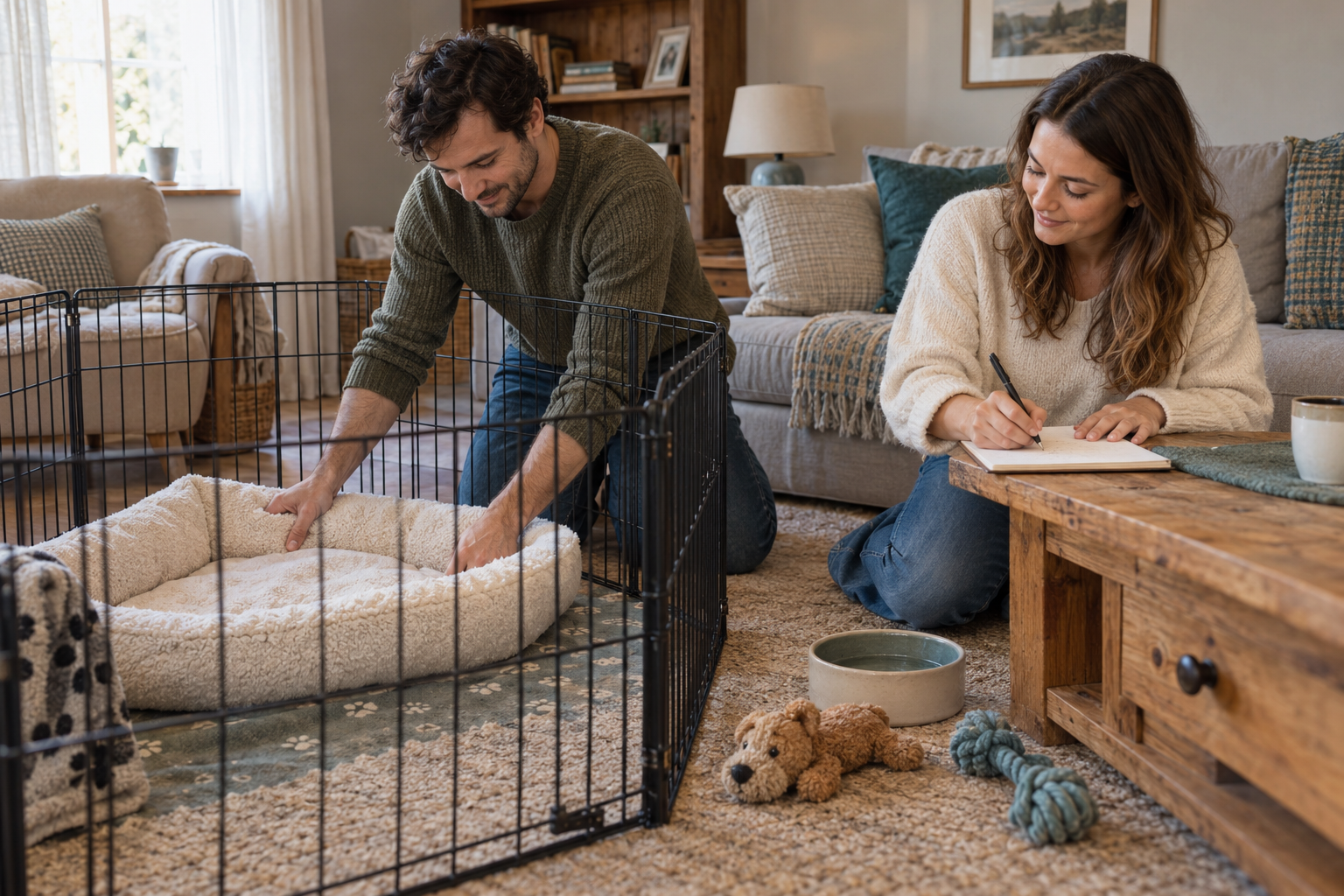
AI-generated staged example: preparing the puppy’s resting space and writing a household plan together.
Before you begin
Prepare one note together
Start the conversation before collection day, while the family has time to ask questions and change arrangements. A useful preparation note names the puppy, explains what will be familiar, assigns the daily jobs and gives the family a clear way to ask for help.
Use the blank worksheet below during a call or visit. Keep the detailed feeding instructions and health records in their own documents, then name those documents in the note. In pupID, a short Welcome note and a reviewed PDF attachment can carry the agreed information into the go-home packet.
01
Set up the places the puppy will use
Ask the family to describe the first evening at home. Where will the puppy rest? Which door leads to the toilet area? Where can an adult stay nearby? Talking through an ordinary evening often reveals more than asking whether they have bought everything.
Provide a quiet, comfortable resting place and remove hazards within reach. RSPCA guidance includes safe space, suitable toys and somewhere to rest undisturbed. [1]
Walk through the space at puppy height: look for accessible medicines, cleaners, cables, small objects and gaps at doors or fences. Agree how the puppy will be separated from other pets when needed. The family should ask for help with introductions if they are unsure.
02
Name the person who handles each job
“We’ll all help” leaves gaps. Ask who is available during the day, who handles meals and toilet trips, and who responds at night. Write a main person and a backup. Include workdays and the first day the usual helper will be away.
Children can help with suitable tasks, but an adult needs to take responsibility. Plan adult supervision whenever children and the puppy are together. Leave the puppy alone when resting or eating, and give them space to move away. [2]
Fictional household example
Make the backup specific
Morning meals & toilet tripsAlex · Sam covers early shifts
Daytime careSam · Alex arranges cover before returning to work
Night-time needsAlex · agree a changeover if either person is too tired
Vet calls & recordsSam · both adults keep the clinic number
Explain what the puppy is used to
Give observations, with a date, rather than labels such as “fully trained” or “good with children.” For example: “On October 9, Clover rested in an open pen after play while an adult sat nearby.” That tells the family what happened without promising the same response in a new home.
Name the current food and the separate feeding sheet, sleeping arrangement, toilet surface, familiar words and toys. Explain what has only been introduced and what still needs practice. Ask the family to keep the familiar food and routine initially; discuss changes with their veterinarian where health or diet advice is involved. [3]
03
Agree on collection and the journey home
Put the date, time, full collection address and a contact number in the note. Name who is coming, how long the journey is and who to call if they are delayed. Check any collection requirements directly with the breeder.
Discuss the car arrangement in advance. Use a suitable secured carrier or dog restraint, fitted according to its instructions. A loose puppy can distract the driver or be injured in a sudden stop. [1] Ask the veterinarian about any puppy-specific travel concern rather than improvising medication or a feeding change.
Leave time to demonstrate the current routine, answer questions and check that the family can open the materials they are taking. Record any unresolved question and who will answer it.
04
Plan for the first days, then adjust together
Make room for meals, toilet opportunities, rest and short, gentle interactions. Keep the first days manageable rather than filling them with visitors. RSPCA advice supports familiar routines, regular rest and positive experiences. [3] A puppy may need help settling in a new place; the note should not promise a quiet first night or a fixed adjustment timetable.
Socialisation means helping a puppy experience people, animals, places and everyday sounds safely. AVSAB recommends early positive experiences without overwhelming the puppy. If the puppy avoids an experience or seems frightened, reduce the pressure and seek veterinary guidance for persistent fear. Ask the family’s veterinarian which outings and classes are appropriate for this puppy’s health, vaccination status and local infection risk. [4]
Routine questions
Make breeder support clear
Give a preferred contact method, typical reply hours and an agreed check-in. Ask for a concrete observation: “What happened, when, and what did you try?”
Health concerns
Keep the vet route separate
Have the family choose a veterinary practice and confirm its out-of-hours arrangements before collection. Follow the puppy’s individual veterinary instructions. A breeder reply or planned check-in must not delay urgent veterinary advice.
05
Write the family’s preparation note
Fill this in together. Keep answers short enough to use during a busy evening. The fictional example shows the level of detail; replace every entry before using it for a real puppy.
This worksheet stays in this page for this visit. It does not save to pupID. Download a text copy before closing or reloading. The example and blank buttons replace the fields below.
pupID.Family worksheet · not an app record
Our puppy plan
Blank starter · complete and review with the family
Household preparation only. Keep the breeder’s feeding sheet and the puppy’s individual veterinary instructions with this note.
Use the agreed note in pupID
Carry the plan into the family handoff
Before collection, share the preparation note through your usual agreed contact method. The inspected pupID packet email flow requires the actual go-home to be recorded first; don’t record an early handoff just to send a preparation message.
For the go-home copy, sign in, open Prepare go-home in Families and select the correct litter, puppy and family. In Packet → Welcome note, write the short introduction and point to the family plan.
Sign-in and puppy/family selection required. This guide opens the task without supplying account data.
To include the longer note, use your browser’s print dialog to save it as a PDF. Review every page, then use PDFs & photos → Upload & select file in Packet. Name it clearly, for example “Clover — family plan — October 10.” PDFs keep their original contents, so remove any private information the family should not receive.
Open the saved packet preview and the selected file. Check the puppy, recipient, date and contact details. Record go-home and sending the family email are separate actions. Confirm the real handoff before recording it, then review the Email step and its delivery status.
These controls were verified in source on October 10, 2026. No live account, upload, handoff or email was tested or changed for this guide.
Sources and scope
Where the advice comes from
The household worksheet and conversation prompts are Good Harbor editorial tools. The welfare and behavior recommendations below are general education; they do not replace individual veterinary care. No clinical review has been performed.
Quiet rest, safe space, hazard removal and suitable vehicle restraint. England/Wales welfare guidance; its legal references apply there. No publication date displayed. This guide does not extend those laws to other places.
Adult supervision, space to move away, and undisturbed eating and rest. General family safety guidance; no publication date displayed. No guarantee of safe behavior.
Familiar food/routines, preparation, positive experiences and rest. Age-organised education; no publication date displayed. This guide does not use its age bands as an individual vaccination or treatment schedule.