
Everyday litter care / Supplies & storage
Organize puppy supplies around the work you actually do
The useful storage system is the one that still makes sense with your hands full.
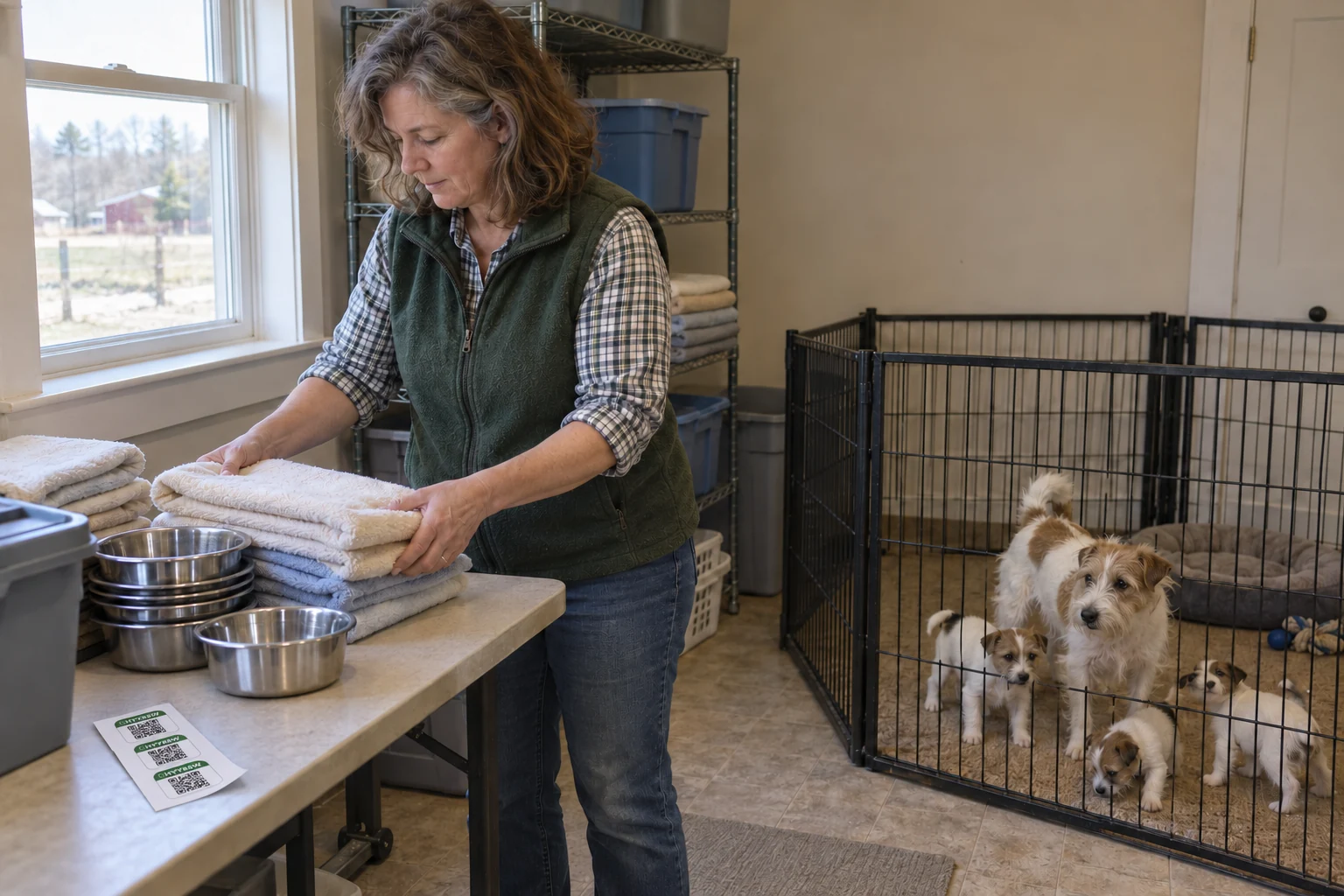
Pick one regular job. Put the appropriate ready supplies where you can get them, decide where used items go, and make the return to storage clear.
A room can have plenty of storage and still send you on a search for one towel. The problem may be the grouping, the label or the point where used items rejoin the shelf.
Before buying another basket, follow a task from beginning to end. What do you take? What do you put down? What comes back, and in what state? That small inventory is more useful than a cupboard that looks organized only when nobody is using it.
Name the job before you name the bin.
Begin with something ordinary: changing bedding, preparing bowls, observing the litter or putting washed items away. Write what you actually reach for. Leave out supplies that belong to another job, even if they happen to share the drawer.
Then distinguish what needs to be at the working spot from what can stay in reserve. A small appropriate amount of ready linen may be easier to protect and retrieve than the whole household stock. There is no universal quantity to buy or keep here; work from your use, space and care arrangements.
Look at the furniture you already have. Can you reach the shelf without leaning over the pen? Can a lid open where the tub sits? Can the surface and container be maintained appropriately? A convenient handle is useful only if the container’s other features suit the job.
Try the grouping before making it permanent. A simple temporary label can help you learn whether a category makes sense to the next person. “Bedding change” tells a helper more about the job than “miscellaneous,” which is usually a polite name for a future search.
Keep different storage needs distinct.
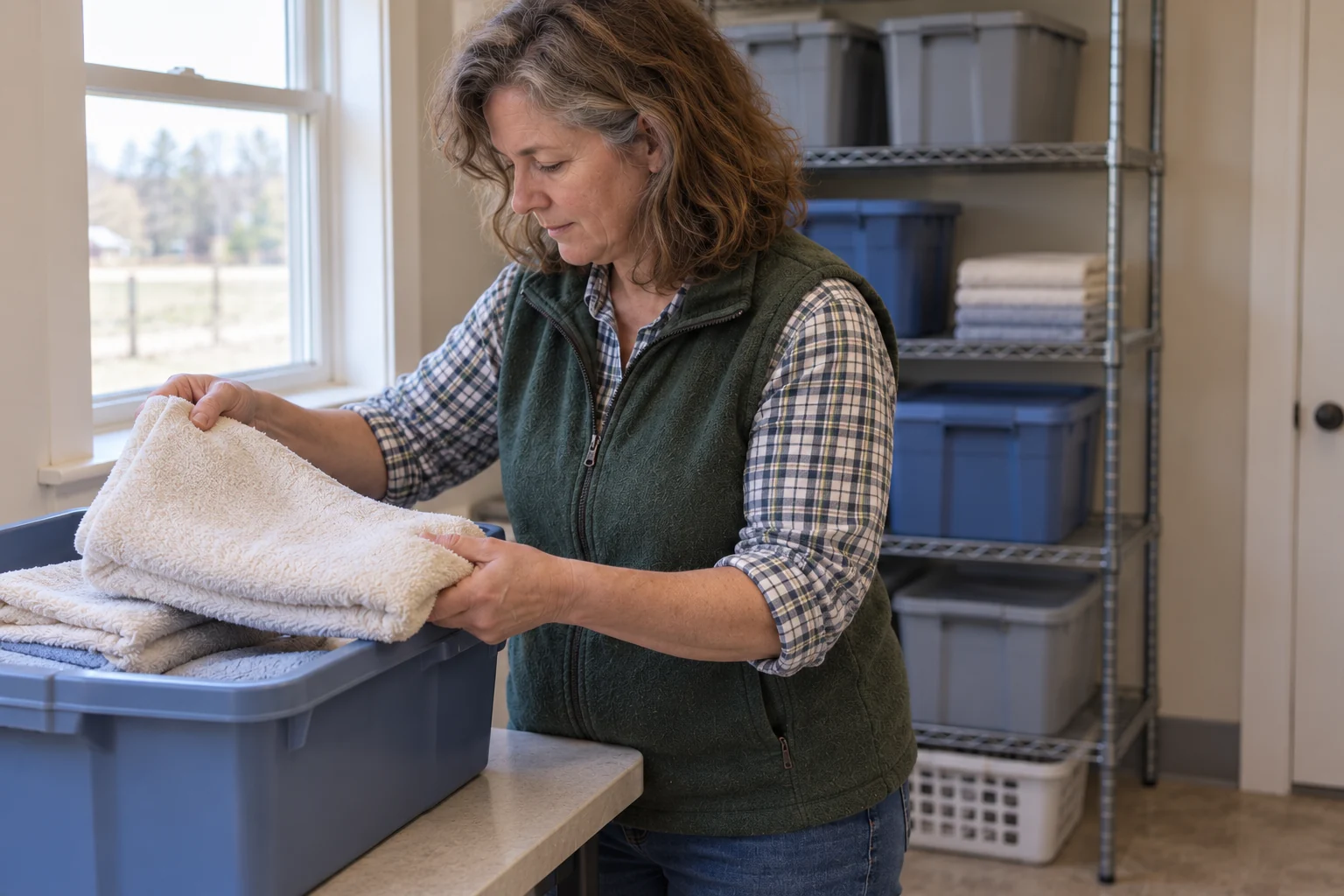
Grouping by task does not mean putting everything for the task in one container. Clean linen, food, used bowls and cleaning chemicals need different handling. Make those differences visible in where things live.
Keep disinfectants out of animals’ reach and preserve their directions. CDC gives safe-storage guidance; EPA explains why the actual label matters to the intended use. A convenient decanted bottle with an incomplete label creates a problem that matching containers cannot solve. CDC EPA
Food has its own requirements. FDA advises secure, cool dry storage for dry pet food in its original bag, with the top tightly folded. It also recommends a clean dedicated scoop rather than using the animal’s bowl as a scoop. Keep the original product identity available instead of treating food as another loose supply. FDA
Do not use this general storage exercise to reorganize medications or clinical supplies. Their handling follows the relevant label and your veterinarian’s instructions. You can improve where a clean towel lives without inventing a medical-storage system at the same time.
Make putting things back part of the system.
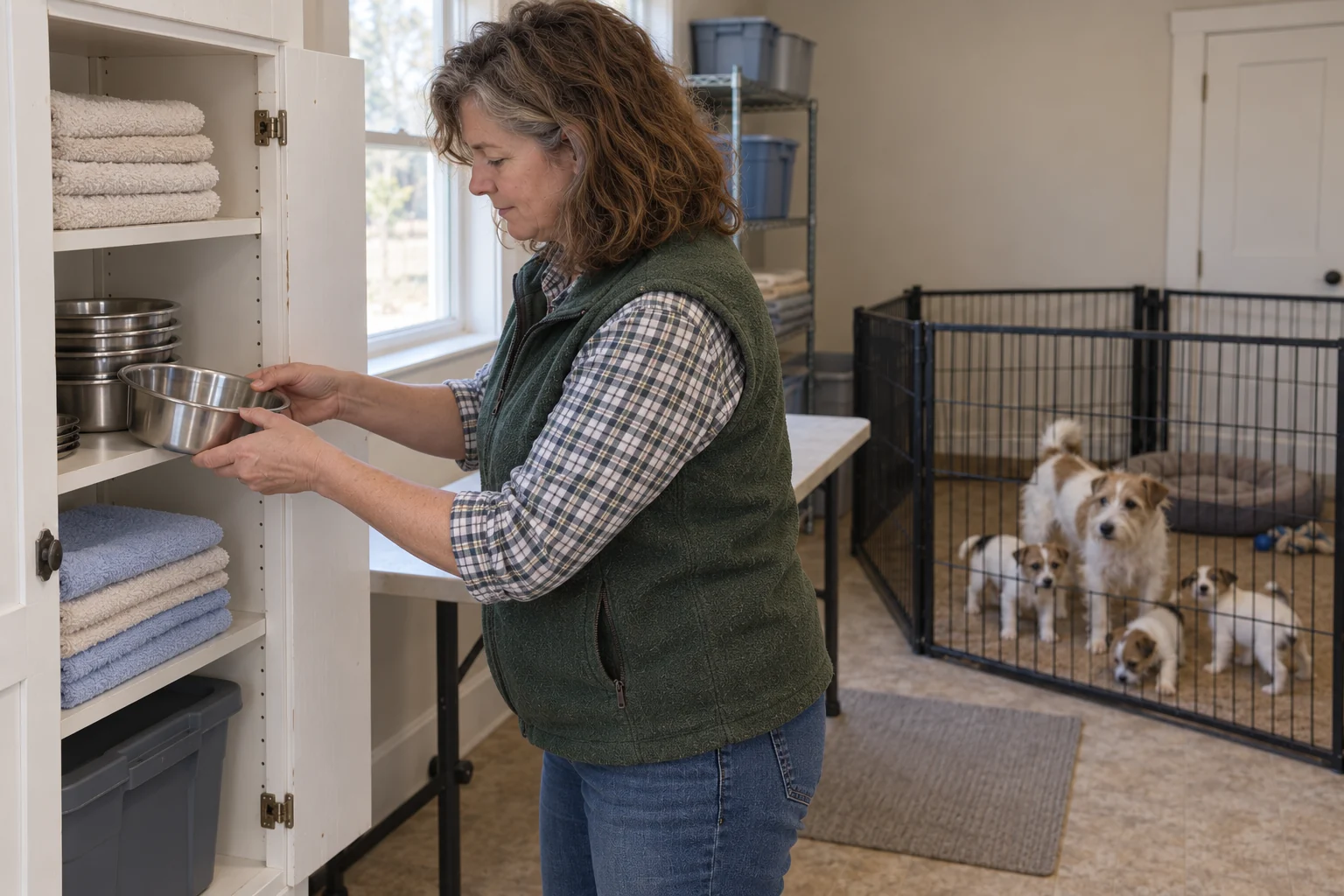
A useful home is one you can use at the end of the job. If reaching it means moving three other containers, an item may acquire a new home on the nearest bench.
Decide what state an item must be in before it comes back. Used bowls should not join the ready stack because the washing area is busy. A towel that is waiting for its next process should not look indistinguishable from protected ready linen. Keep unfinished work apparent.
Ask another caregiver to find and return one item without a tour of the whole room. Watch which label they look for, where they pause and what they assume. That tells you whether the system is understandable or simply familiar to its inventor.
Adjust one awkward point, then try the task again. You may need a clearer label or a different shelf rather than new furniture. When a change creates more reaching, lifting or confusion elsewhere, include that in the decision too.
Make low stock visible before it becomes a search.
Separate a retrieval problem from a supply problem. If there are no appropriate towels left, moving the empty basket will not help. If the reserve is full but nobody knows where it is, buying more towels may make the confusion larger.
Choose a simple way to notice that a working supply needs replenishing. It might be an agreed place for a note or a visible reserve location. Decide who checks it and who actually obtains more. The useful part is the agreement, not a complicated tracking system.
Use the original packaging and instructions to review condition, dates and storage requirements where relevant. Do not make a generic expiry calendar for unlike products. If you cannot identify an item or establish how it has been kept, resolve that before treating it as ready stock.
Revisit the arrangement when the work changes. A litter getting older, a different caregiver or a different room can make yesterday’s sensible grouping awkward. Keep what works, change what doesn’t, and let the system remain ordinary enough to use.
Keep a useful copy
Map one task and its supplies.
Choose a regular job and follow take, use, return and replace. Use your existing equipment first; keep food, chemicals and clinical supplies under their own instructions.
Optional notes stay in this page until you reset or reload it. Download a text copy to keep them. Nothing is sent or saved to an account.
Make it easy to do the ordinary job.
A good storage arrangement explains itself while the work is happening. The supplies can be plain, the furniture can be familiar, and the system can still be thoughtfully put together.
Finished reading?
Keep track of the guides you’ve explored.
Read further
Sources & scope
- CDC · Cleaning and disinfecting pet supplies
February 18, 2026. Household guidance: cleaning, higher-risk circumstances and safe handling. Its example household schedule is not a litter-care protocol.
- EPA · Selected EPA-registered disinfectants
Updated August 24, 2026. See Directions for Use: intended sites, application and wet contact time. The actual product label controls.
- FDA · Safe handling of pet food and treats
Tips for Preparing Pet Food and Tips for Storing Pet Food. Original bags, secure cool dry storage, separate scoops and handling; accessed October 10, 2026.