
Breeder life & families · someone else can find it
Make a backup caregiver’s first hour straightforward
Give your backup caregiver a working handover.
Make the first hour easier.
A willing helper still needs to know where things are. Walk through access, identification, current care instructions and contacts while you can answer the questions.
Make a caregiver handover ↓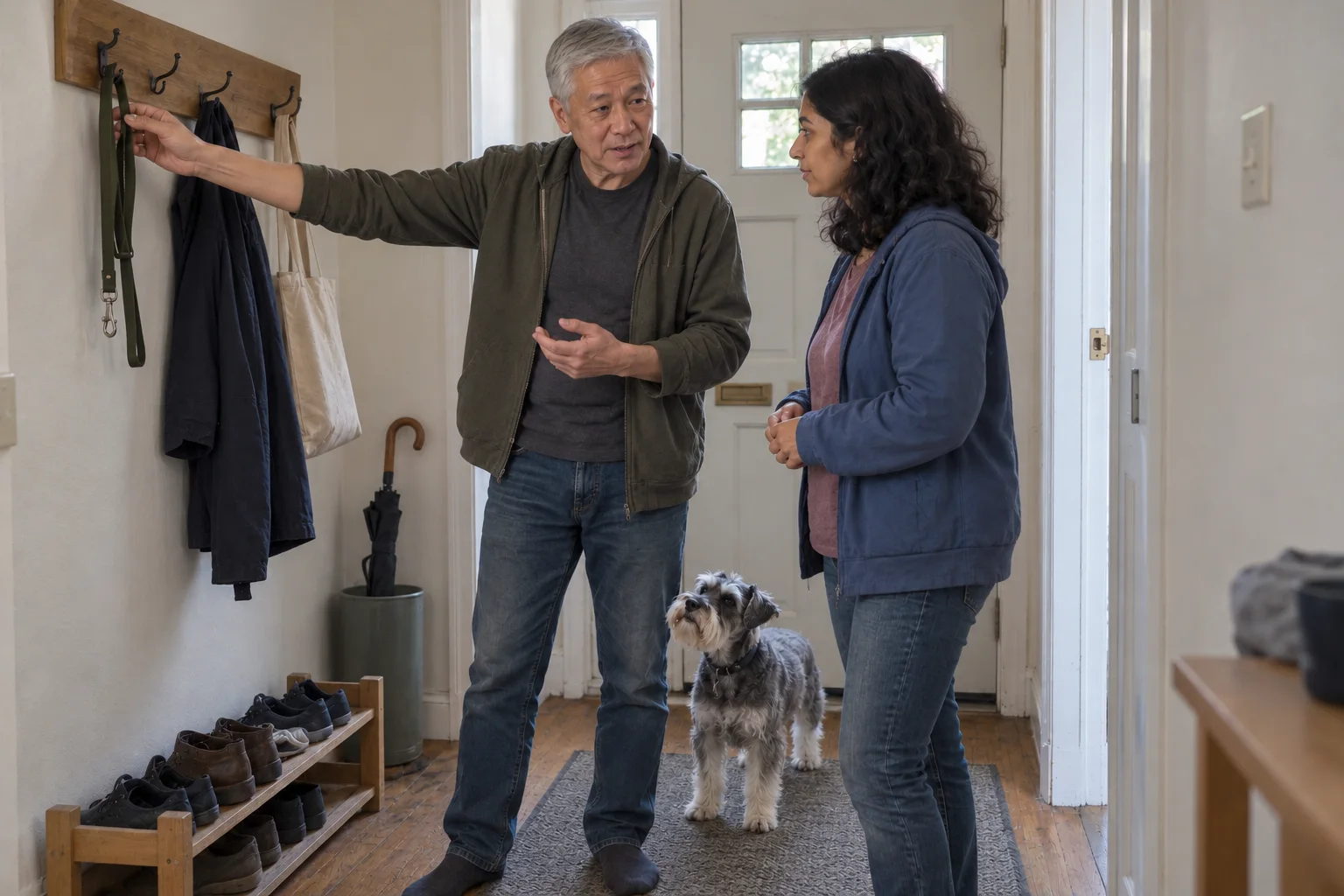
Choose cover for the care that actually needs doing.
A friend who is comfortable walking an adult dog may be a lovely helper. That doesn’t automatically equip them to cover a newborn litter, a whelping dam or a dog with complex medical needs. Start by describing the work and checking that the person has the experience and availability to do it.
Agree what they will cover and for how long. Include the care you do almost without thinking: checking a gate, keeping particular dogs apart, noticing what is left in a bowl, finding the current record. Those habits are obvious to you because you do them. Your caregiver has not yet acquired the map in your head.
“First hour” is a way to think about orientation. It is not a biological deadline or a promise that an hour of explanation makes every kind of cover safe. Some arrangements need professional training or different help.
Reference sheet 01 · walk the route
Door. Dog. Instructions.
Supplies. Help.
Use this route while you are both present. A missing detail is easier to fix now than from a bad phone signal later.
| What to record | Keep this distinction |
|---|---|
| Get in and keep everyone secure | Access should work before you need cover. Try the agreed entry method. Show doors, gates and barriers that must stay shut; keep access details private. |
| Know which dog is which | Recognition needs more than a familiar nickname. Match each dog to the current record using reliable identifying details. Clarify groups, separation and handling arrangements. |
| Find the current instruction | One clear version beats three nearly right ones. Show the dated care directions, where the original records live and which changes are current. Remove superseded copies from the working spot. |
| Locate what the job needs | Walk to the supplies together. Find food, bowls, leads, cleaning supplies, records and transport equipment. Demonstrate unfamiliar tasks while you are there. |
| Know who can help | Write a route that works if you are unreachable. Confirm the veterinary practice, out-of-hours service and another responsible contact. Check access to records and the clinic’s authorization process directly. |
Original Good Harbor orientation prompts, informed by AVMA preparedness logistics. No emergency timeline is implied.
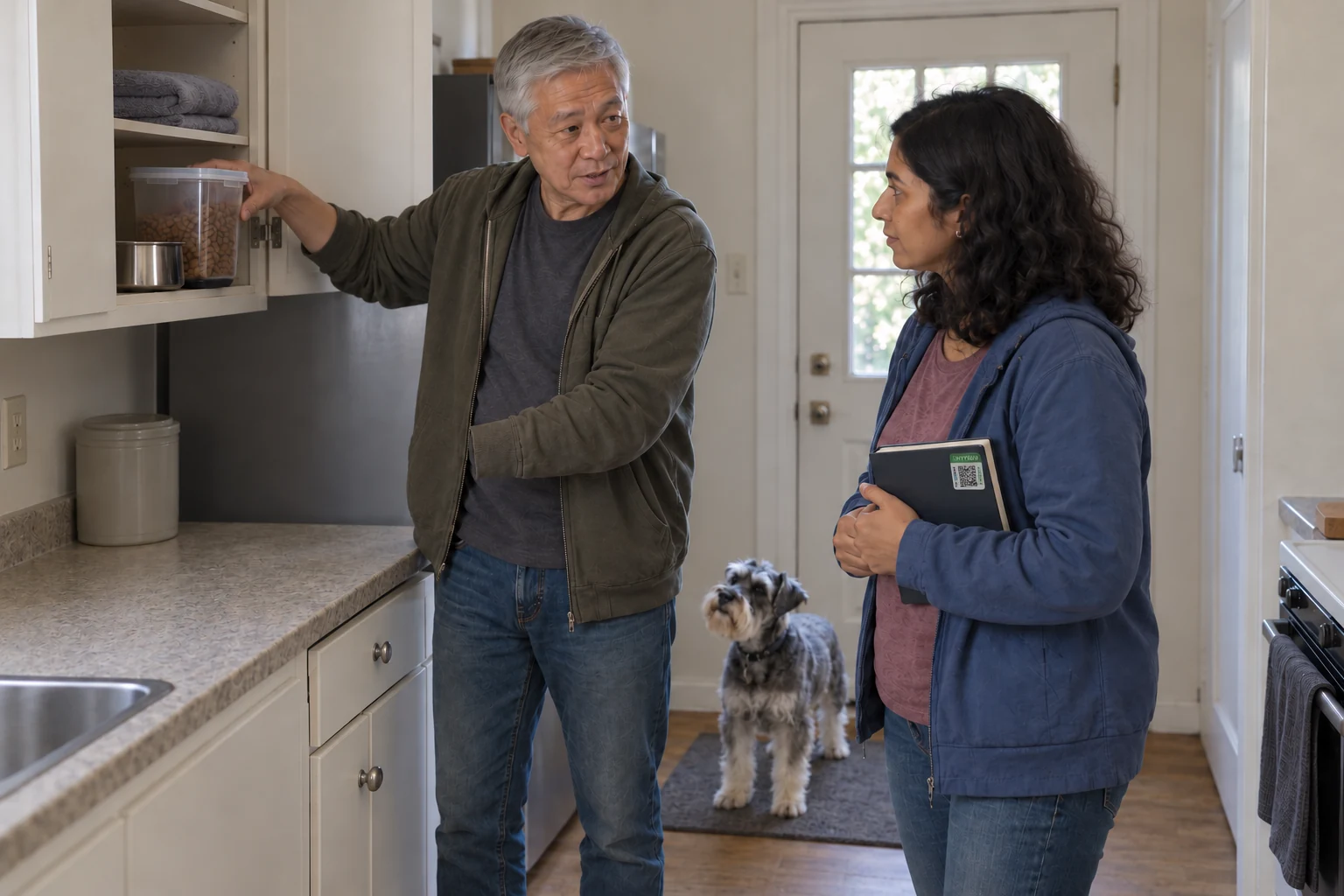
Show the location, then check the instructions.
Walk to the food, leads, bowls, cleaning equipment and transport arrangements. Show where current records are kept. If the caregiver needs a phone or account to open them, check that access works without relying on your unlocked device.
Make the working instructions easy to recognize. Add a date or version and keep old copies out of the working spot. If a veterinary direction has changed, help the caregiver find the clinician’s actual current instruction rather than asking them to reconstruct it from messages.
AVMA’s preparedness booklet recommends arranging a willing alternate caregiver who knows the animals, can gain access and can find supplies. It also raises veterinary authorization. Ask your own practice how that works for your circumstances; a handwritten name on this sheet does not settle the clinic’s requirements. AVMA booklet ↗
Let them do the finding.
Once you’ve shown the route, ask the caregiver to find the right lead or the current care record while you watch. Let them check the gate latch and talk through the next scheduled task. This is a check on the handover, not a test of how well they remember your kitchen tour.
If they hesitate, improve the setup. A better location or clearer instruction may solve more than another long explanation. You can put the everyday items together without building a complicated new filing system.
Leave space for their questions. “What would make this difficult while I’m away?” can reveal a transport problem, a time conflict or a task they’re not confident doing. It is useful to hear that before the cover starts.
Reference sheet 02 · make it useful
If you’re covering for me
Complete this with your caregiver. Keep it somewhere they can actually reach, alongside the current care directions and the original records.
If you’re covering for me
Date / version: ____________________
Keep keys, entry codes and private contacts in an agreed secure place. This orientation sheet does not supply clinical instructions.
Notes stay on this page until you leave or reload. Download a copy to keep them. This page does not save notes to an account.
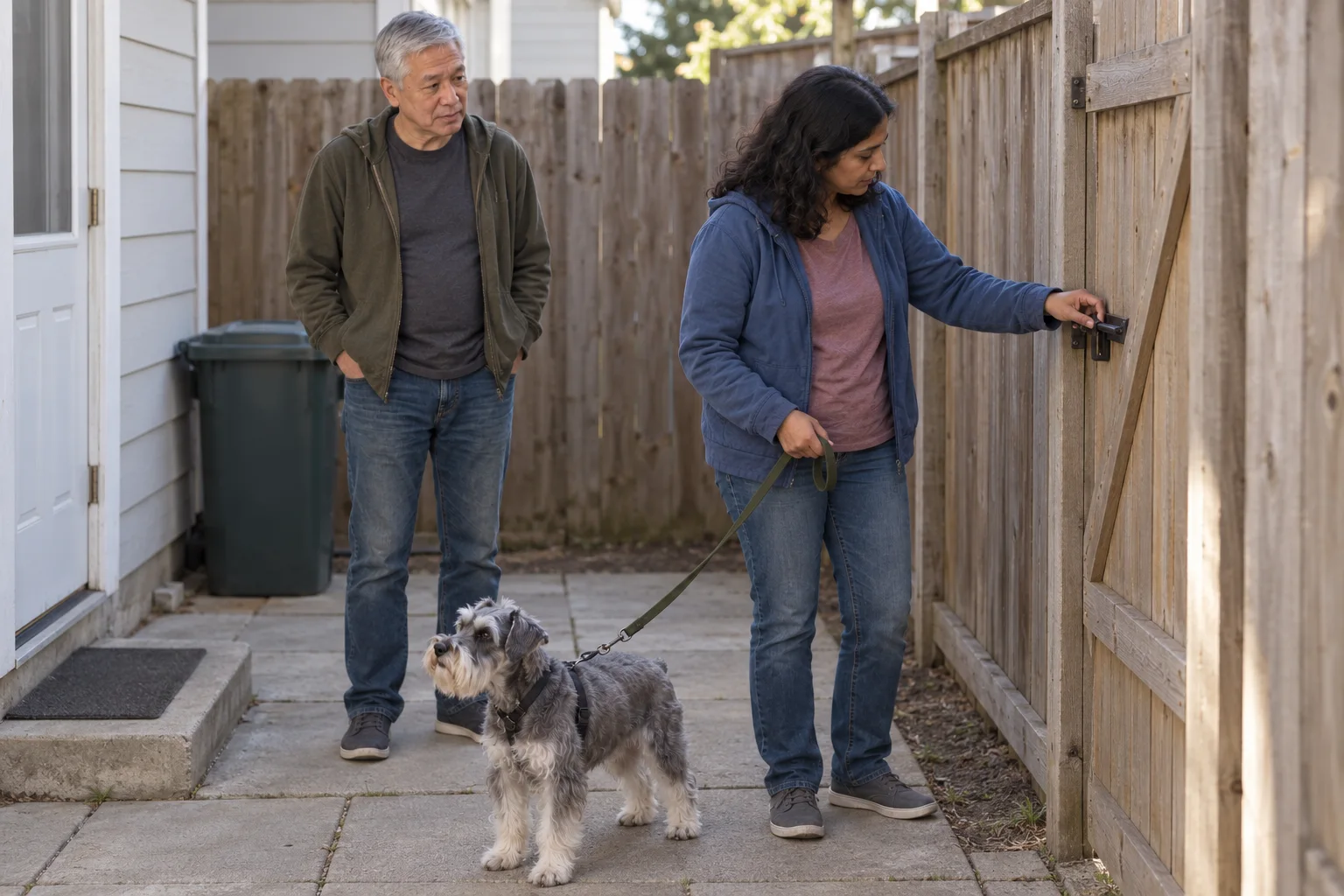
Finish with a handover both of you can use.
Ask the caregiver to say back what they will do first, what is due during their cover and whom they will contact if they cannot reach you. Confirm the arrangements that still need an answer.
Leave one current working sheet and the original directions it points to. After the cover, ask what was hard to find and change that part. The best improvement may be moving the spare lead. It does not have to be a whole new binder.
Read further
The guidance behind the handover.
Emergency-preparedness logistics inform the location and contact prompts. This article is an orientation for temporary cover, not an emergency or neonatal-care protocol.
- American Veterinary Medical Association
Saving the Whole Family ↗
Disaster-preparedness booklet: alternate caregivers, access, supplies and contacts; printed p.4 and pp.11–13. The orientation sheet here adapts those logistical ideas for temporary cover. PDF version date unverified.
- Katherine Pankratz · Merck Veterinary Manual
Diagnosis of Behavior Problems in Animals ↗
Reviewed September 2024; updated June 2025. Clinical assessment considers history, context and possible medical causes. A breeder record or conversation does not replace that assessment.
- American Kennel Club
Guide to Responsible Dog Breeding ↗
US breeder education. The commitment section describes expenses and work; the lifelong-support section describes continuing contact. Undated current web guidance, checked October 10, 2026.
How the evidence is used
AVMA Saving the Whole Family, printed p.4 (PDF p.5), describes willing alternate caregivers, familiarity, access and supply locations, and possible veterinary authorization. Printed pp.11–13 cover contact and small-animal supply planning. The first-hour orientation and its layout are editorial adaptations, not an AVMA timetable.
The article deliberately supplies no drug doses, feeding calculations, neonatal procedures or emergency thresholds. Merck supports the distinction between useful history and clinical assessment. Caregiver competence and any clinic authorization must be confirmed for the individual circumstances.
Finished reading?
Keep track of the guides you’ve explored.
Sources checked October 10, 2026.