
The work around a litter
Make the emergency plan before your dog’s labor starts
Know who to call, where you may be sent and how you’ll get there—before you need to make those decisions in a hurry.
Start reading →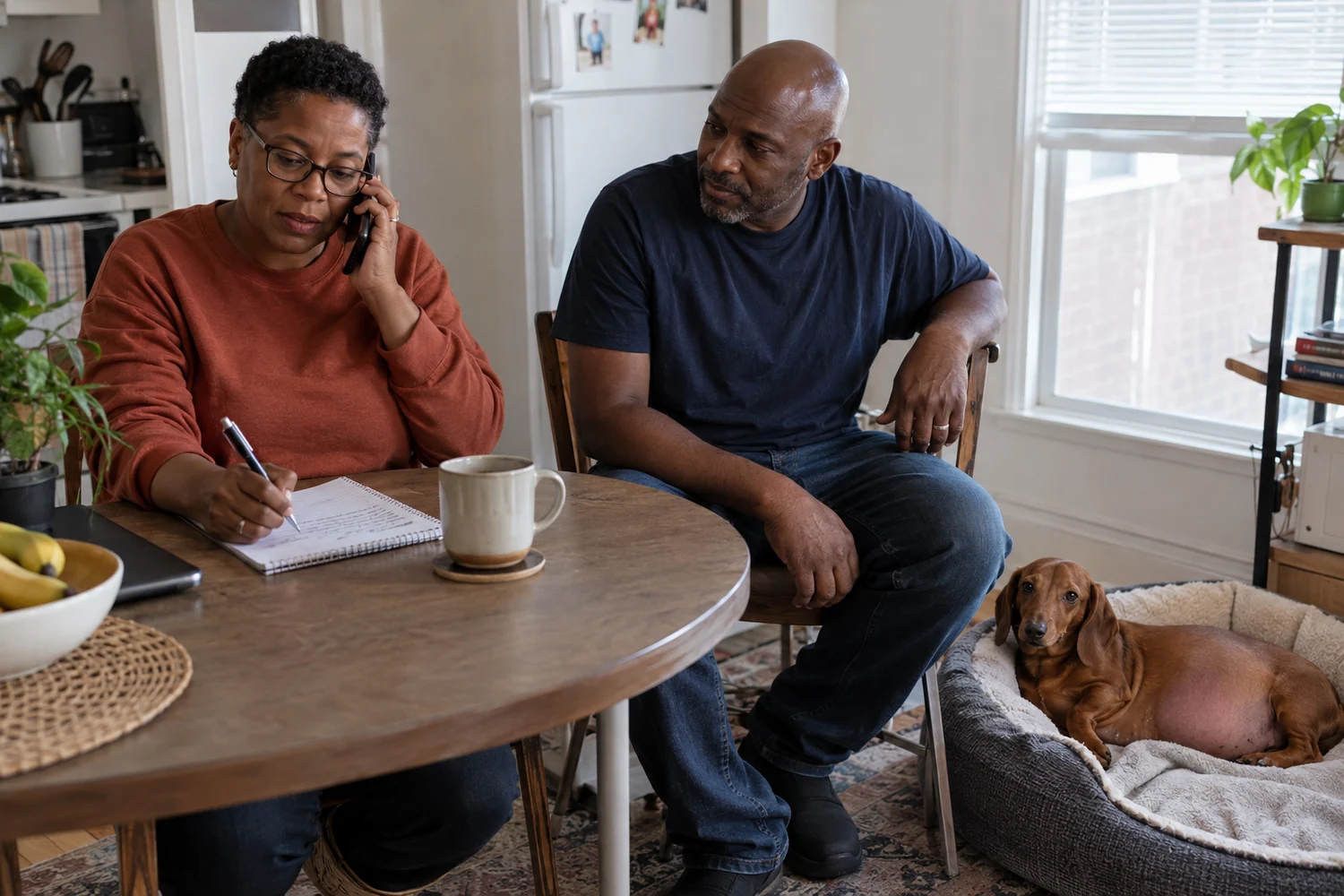
A saved phone number is a start. A useful plan also says who answers after hours, what happens next and who can help you carry it out.
Birth & mother · 01
Ask the clinic how help actually works
Before the expected birth, talk to the veterinarian caring for the mother. Ask which number to use during normal hours and after hours, who receives those calls, and where you should go if an examination is needed. Confirm whether the destination changes overnight or at weekends.
Ask what the receiving clinic can provide and whether you should call ahead before travelling. Write down the answer and when you confirmed it. An emergency-service listing alone doesn’t tell you that the right team, facilities or capacity will be available when you arrive.
Keep the next step clear
Contact
Use the number and calling instructions agreed with your veterinarian.
Confirm
Follow the receiving clinic’s directions and confirm the destination.
Arrange
Use the agreed people, transport and record handoff.
Good Harbor editorial reference · A way to organize the question, not a clinical decision tool.
Birth & mother · 02
Keep clinical decisions with the veterinarian
Difficult birth can have different causes, and assessment may involve examination and imaging. Treatment depends on the findings; it may involve medical or surgical care. That is why a transport plan needs a clinical contact, rather than a generic set of instructions found online. Merck Veterinary Manual ↗
Ask your veterinarian to give you the signs and circumstances that should prompt a call for this mother, what to report and what to do while following their advice. Keep those instructions with the contact sheet. This article’s blank plan deliberately leaves that part for them.

Birth & mother · 03
Name the people and the practical arrangements
Choose who makes the call and who can drive. If one person does both, work out a backup before the night arrives. Discuss the transport setup with the clinic, including what to bring and how the mother and any puppies should travel.
Check the route, entrance and parking arrangements. Put the address somewhere the driver can find without unlocking someone else’s phone. Consider who will look after other animals or children while you’re away.
Talk about costs and payment arrangements in advance. Ask the clinic what is required, and decide whom to contact if you need help. A realistic plan can include a trusted lift, shared responsibilities and simple paper records; it doesn’t depend on owning expensive equipment.
Birth & mother · 04
Rehearse the handoff once
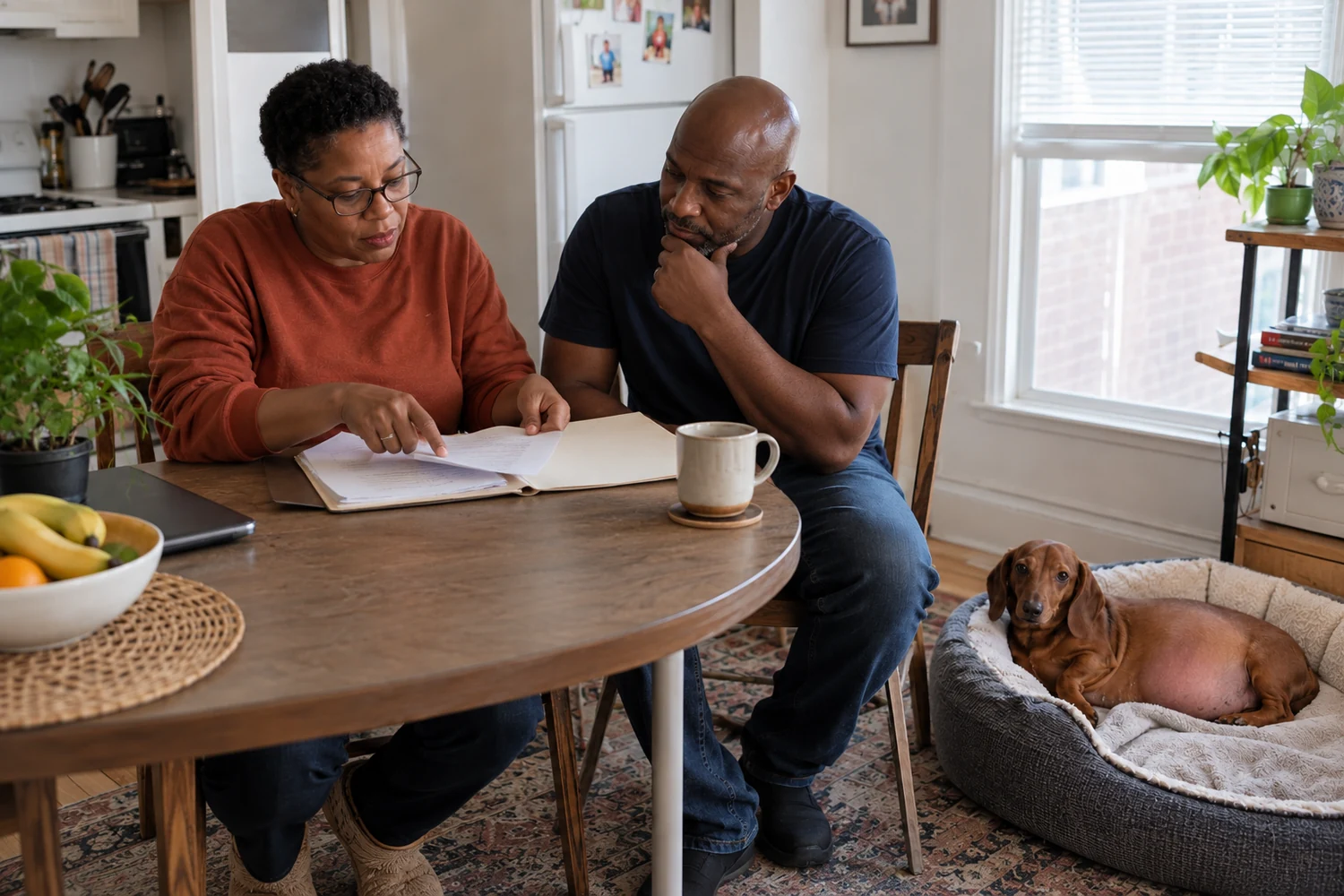
Read the plan aloud with the people named on it. Can the backup find the contact details? Can the driver identify the destination? Does everyone know where the records are? Fix the unclear parts while there is time to ask questions.
Keep a charged phone and an accessible copy of the plan. If the clinic changes its arrangements or someone becomes unavailable, update the copy people will actually use. A plan remembered differently by three people is three plans.
Blank working sheet
Contacts, transport and records
Fill this in with your clinic. It is a logistics aid, not a symptom checklist or a certificate of readiness.
- Mother identity / expected birth period
- Primary clinic / phone / confirmed hours
- After-hours service / phone / confirmed capability
- Destination / entrance / backup destination
- Caller / driver / backup / contact details
- Transport arrangement agreed with clinic
- Records location / who gathers them
- Costs or funding arrangement / household cover
- Clinical instructions supplied by veterinarian / date
Finished reading?
Keep track of the guides you’ve explored.
Follow the evidence
Sources & scope
- Merck Veterinary Manual
Dystocia in Small AnimalsProfessional clinical reference, accessed 10 October 2026. Used for the need for examination, imaging and individualized clinical management; no diagnostic thresholds or treatments reproduced.