
The work around a litter
Give the mother dog room to rest
Keep the surroundings familiar and the traffic low, while making it easy for the people providing care to stay available.
Start reading →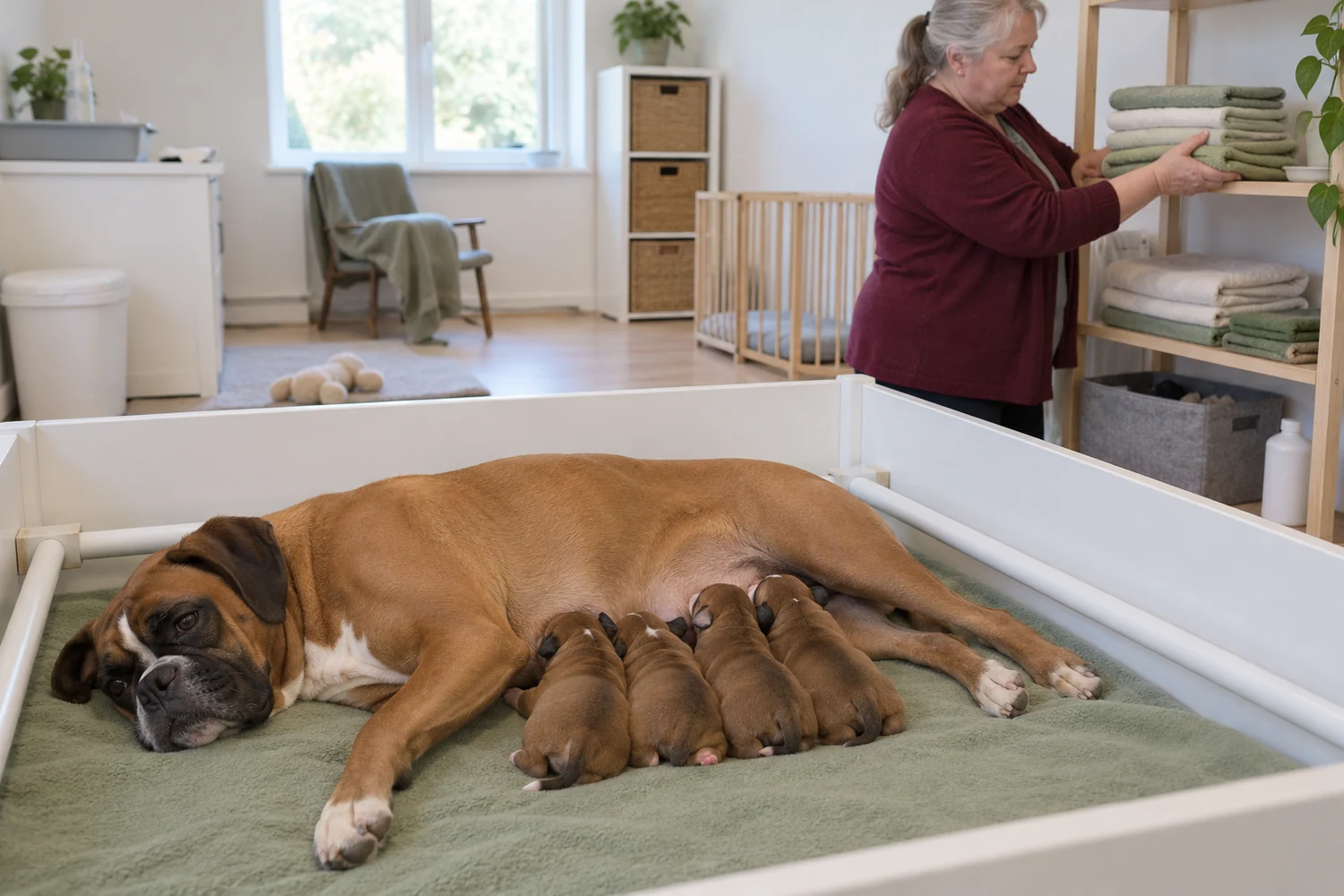
A quiet nursery is partly about the room and partly about what the household does around it. The aim is a mother who can settle, with care close at hand.
Birth & mother · 01
Keep the familiar things familiar
Merck’s professional guidance recommends a familiar, undisturbed area around delivery. Unfamiliar people and surroundings may affect delivery, milk letdown and maternal behavior. Merck Veterinary Manual ↗
That doesn’t mean every household needs a purpose-built room. Start with how the existing space is used: who passes through, what makes noise and which people the mother knows. An ordinary practical room can be more useful than a beautifully arranged space that everyone keeps walking through.
Keep the busy work at the edge
Nursery
Mother and litter, familiar caregiver, observation and care.
Caregiver access
Clear approach; supplies and notes outside the puppy area.
Household boundary
Visitors, deliveries and other traffic handled elsewhere.
Good Harbor editorial reference · Activity zones, not a measured floor plan.
Birth & mother · 02
Move the errands outside the puppy area
Look at the small tasks that bring people into the nursery. Can clean supplies stay within the caregiver’s reach but outside the mother’s box? Can the household fetch a towel without gathering around the litter? Can a delivery or visitor be met elsewhere?
Choose a place for current notes and veterinary instructions that does not require moving animals or reaching across them. Keep access clear for the people providing care. The drawing below organizes activity; it is not a construction plan, a box specification or a ventilation or heating design.

Birth & mother · 03
Let someone manage the doorway
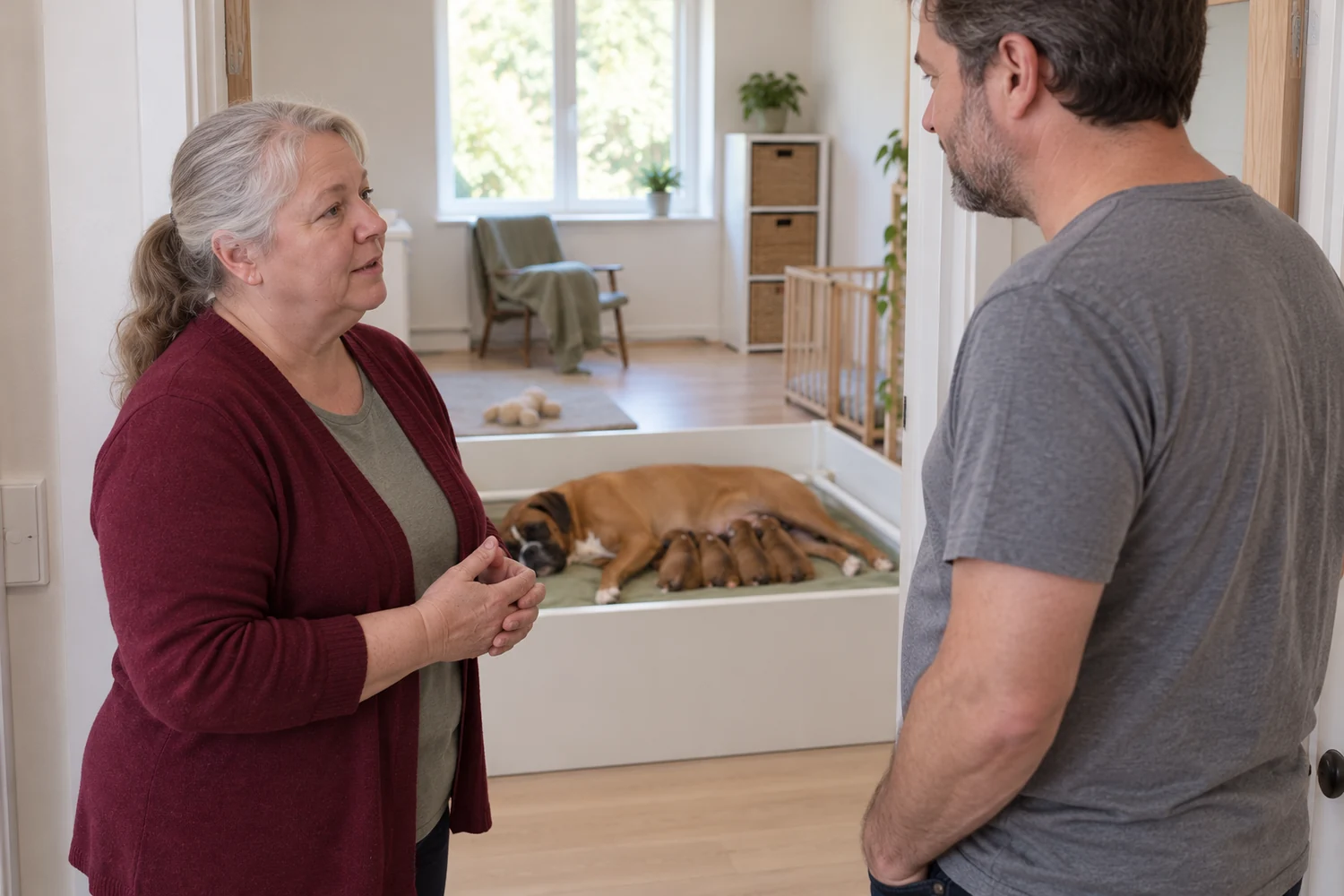
Agree who is caring for the mother and litter and who is handling visitors, household questions and other animals. Give people a simple way to ask for the caregiver without entering the nursery.
A visitor boundary works better when the household understands the reason. You are reducing interruptions, not creating a display that everyone needs to see. Photos and conversation can wait until the person responsible has time to share them.
Birth & mother · 04
Notice the mother without explaining everything away
A calm environment is one part of care. It cannot tell you whether a change in behavior is due to discomfort, illness, pain or another problem. Professional guidance also identifies postpartum conditions that need assessment. Contact your veterinarian about concerns rather than assuming the room is the explanation. Clinical context ↗
Ask your veterinarian how to arrange the mother’s needs and any time away from the litter while appropriate supervision continues. There is no universal rest-minute allowance in the guidance used here. Keep the answer specific to this mother and these puppies.
Write down what you noticed, when it happened and what was happening around her. Those observations can help the conversation without turning a household note into a diagnosis.
Blank working sheet
Observe the surroundings and ask a useful question
Record observations without scoring behavior or assigning a cause. Room arrangements support care; they do not replace clinical assessment.
- Mother / litter / date and time
- What you noticed, in ordinary words
- What was happening in the room
- Who was present / familiar or unfamiliar
- Care already agreed with veterinarian
- Question to ask / contact made / advice received
- Arrangement changed / who follows up
Finished reading?
Keep track of the guides you’ve explored.
Follow the evidence
Sources & scope
- Merck Veterinary Manual · June 2025
Periparturient Problems in Bitches and QueensProfessional management guidance, not an environmental intervention trial. Opening paragraphs inform the familiar-surroundings discussion; postpartum conditions establish the clinical boundary. No universal break duration is supplied.