
The work around a litter
Plan the overnight work around a litter
Give the night a responsible person, a real backup and a handover that survives a tired memory.
Start reading →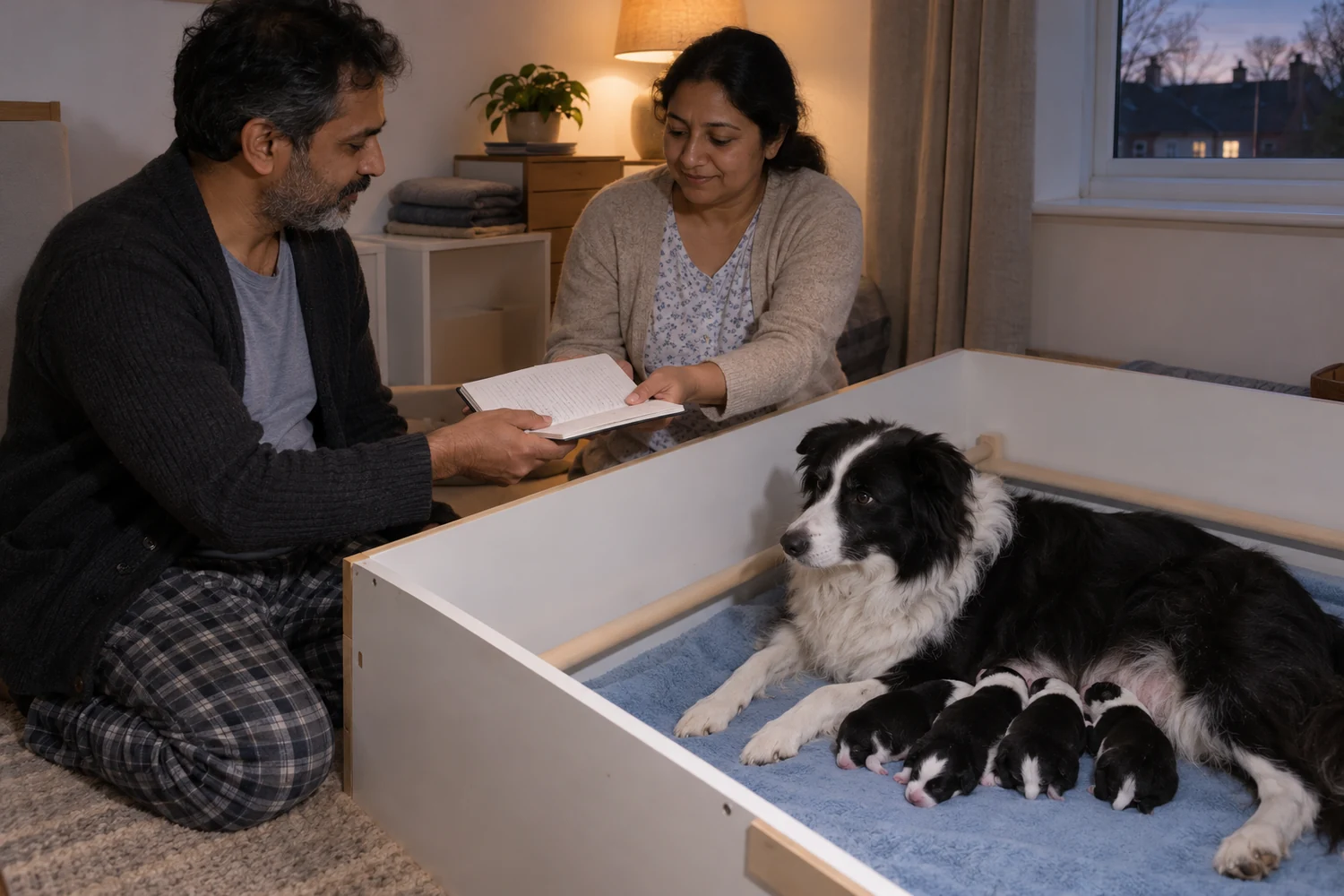
“Wake me if you need anything” sounds helpful. It leaves quite a lot unanswered: who is responsible now, what do they need to know and when does the other person take over?
Birth & mother · 01
Start with the care plan, then arrange the people
Ask your veterinarian what observation and care this mother and litter need. Build the human arrangements around that advice. A coverage sheet cannot decide how often puppies need checking or what an individual mother requires.
Familiar surroundings and close supervision of nursing are part of professional guidance around birth. Sharing the human work should preserve continuity for the animals as well as relief for the people. Merck Veterinary Manual ↗
Four things to pass on
Observed
Identity, time and what you actually noticed.
Done
Actions taken and the instruction they followed.
Next + contact
The next agreed action, responsible person and whom to call.
Good Harbor editorial reference · A way to organize the question, not a clinical decision tool.
Birth & mother · 02
Put a name beside each agreed window
For each period you arrange, name the responsible person and the backup. Write down how to reach the backup and what happens if the next person cannot take over. Confirm that the person has actually agreed, rather than treating proximity as availability.
Include the rest of life in the conversation: work, children, other animals, travel and recovery. A person with a free evening may still have an early shift the next morning. If you are working alone, identify the gap and discuss realistic help with your veterinarian and trusted support network.

Birth & mother · 03
Make relief possible, not merely theoretical
NIOSH guidance for nurses explains that sustained cognitive demands, interruptions and responsibilities at home can make fatigue and recovery harder. That evidence concerns human work; it does not establish a tested breeder shift length or a measured benefit for puppy survival. NIOSH ↗
The practical lesson here is organizational: don’t plan as if attention and memory are unlimited. Agree what the person taking over needs, and allow the off-duty person to step away once responsibility has clearly transferred. A particular number of hours would give false precision for households with different needs.
Birth & mother · 04
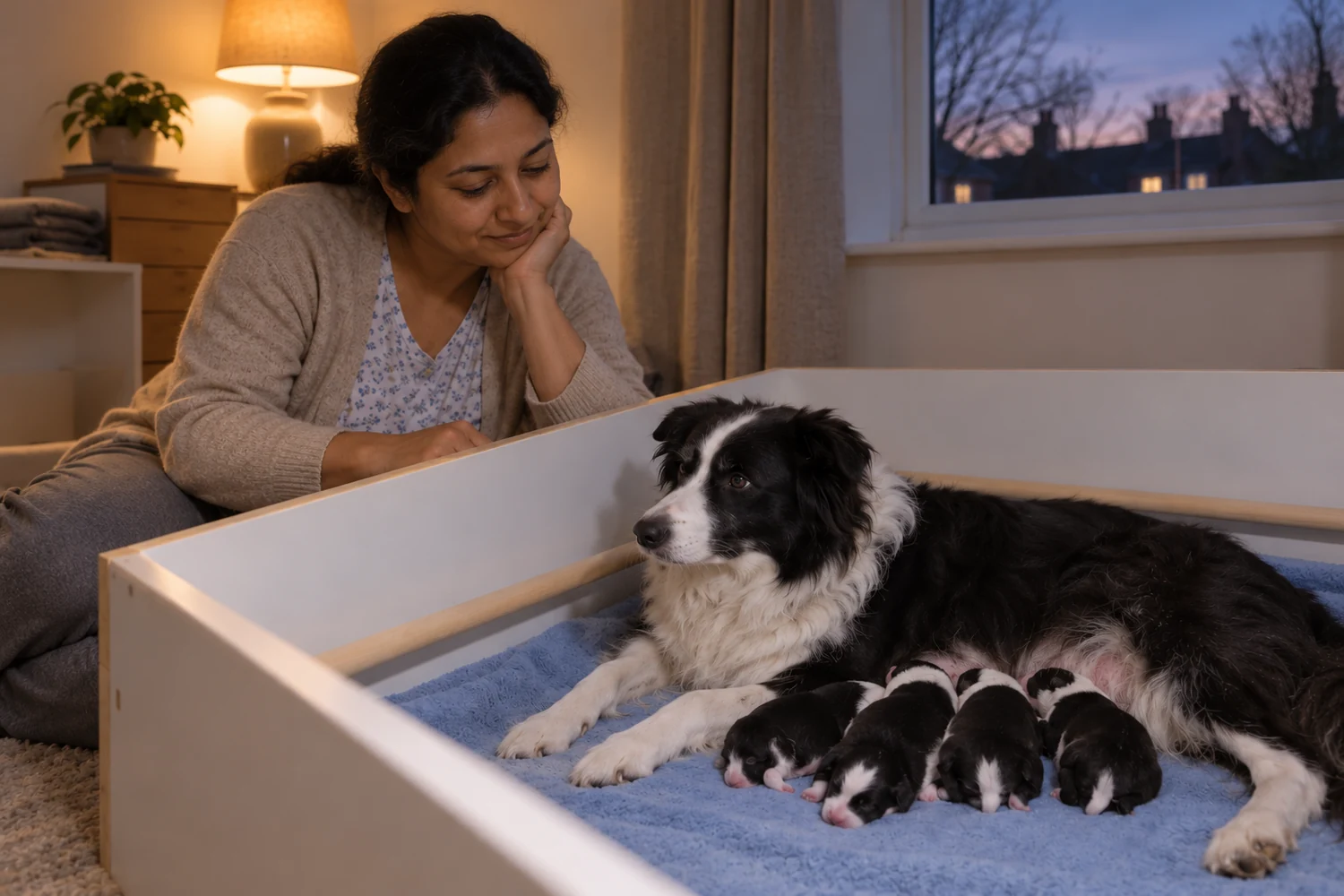
Handover the observations, not just the notebook
Use four headings: what was observed, what was done, the next agreed action and whom to call. Attach times and identities to observations. Keep uncertainty visible: “I didn’t see this happen” means something different from “it didn’t happen.”
Talk through anything the next person could misunderstand. Show them where the current veterinary instructions and contact plan are kept. If the situation changes, get advice rather than quietly extending an old plan.
Before finishing, confirm who is now responsible and when the next handover is expected. That small conversation is the difference between two people assuming the other is watching and one person clearly accepting the work.
Blank working sheet
Overnight coverage and handover
Use one sheet per agreed window. Leave the timing to the people and veterinarian involved; this is not a universal monitoring schedule.
- Mother / litter / date
- Current veterinary plan and where to find it
- Agreed time window / responsible person
- Backup / contact / availability confirmed
- Tasks agreed for this window
- Observed / identity / time
- Done / instruction followed / time
- Next agreed action / person / time
- Contact plan / handover accepted by
Finished reading?
Keep track of the guides you’ve explored.
Follow the evidence
Sources & scope
- NIOSH · reviewed March 2020
Work/Home DemandsHuman nursing-work guidance. The household coverage method is Good Harbor’s editorial adaptation, not a tested canine intervention.
- Merck Veterinary Manual · June 2025
Periparturient Problems in Bitches and QueensOpening management guidance on familiar surroundings and supervised nursing. Specific clinical monitoring requirements remain with the treating veterinarian.