
The work around a litter
Review a litter while the details are fresh
Keep the facts, the interpretation and the next question separate. A useful review doesn’t need a perfect story.
Start reading →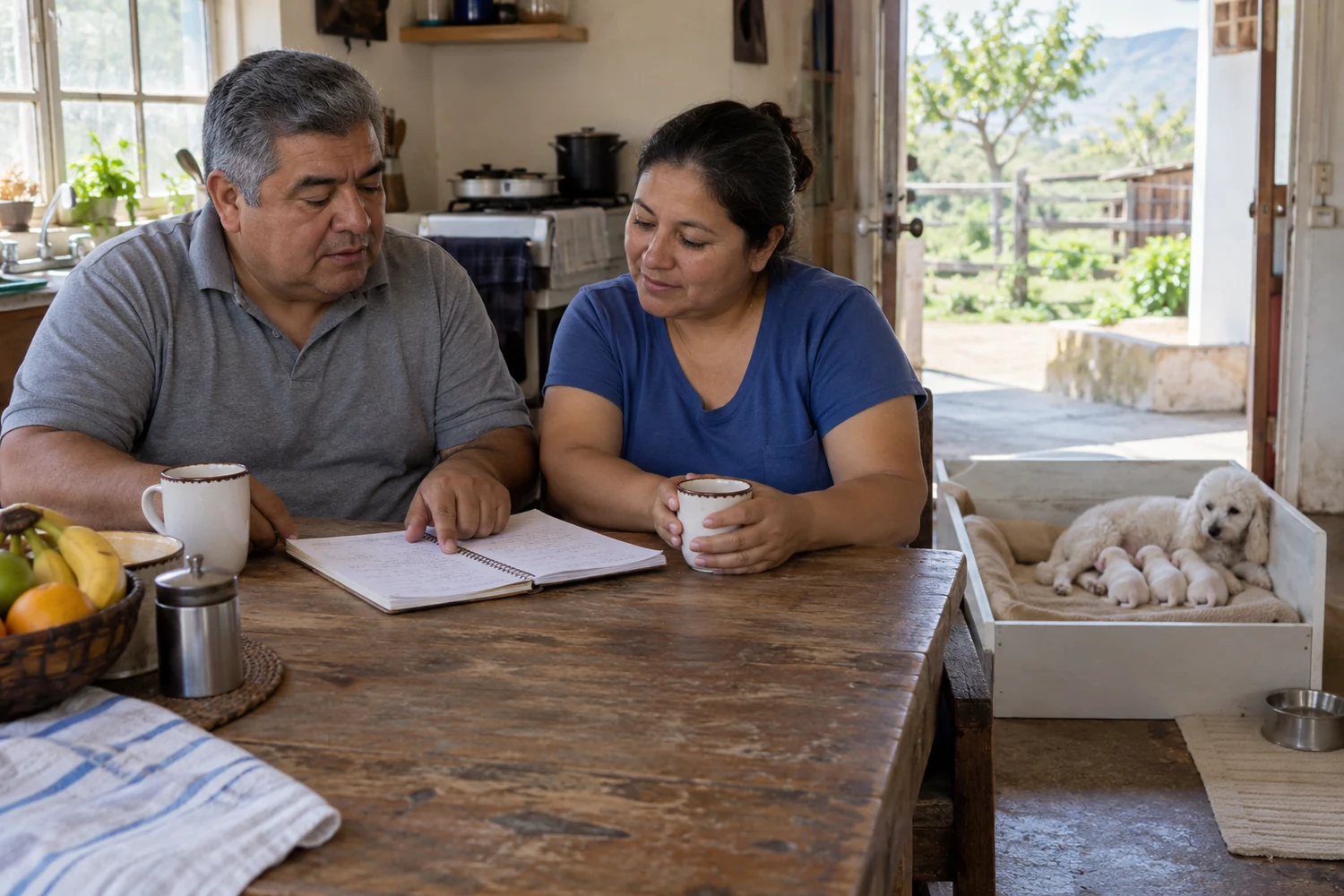
Once the immediate work settles, the details start to blur. A short conversation with the original notes can preserve what helped, what was difficult and what you still need to understand.
Birth & mother · 01
Begin with the records you actually have
Gather dated notes, individual puppy records and any veterinary instructions or reports relevant to the discussion. Keep the source beside a copied fact. If something was remembered later, label it as a later recollection rather than giving it the certainty of a note made at the time.
Include the people who did the work. One person may know why supplies were moved; another may remember a gap in the handover. Ask what happened before asking what it means.
Don’t let an explanation overwrite an event
Recorded event
What happened, when, who noted it and the source.
Interpretation
What you think it might mean; uncertainty stays visible.
Next question
What to check, with whom and who follows up.
Good Harbor editorial reference · A way to organize the question, not a clinical decision tool.
Birth & mother · 02
Keep three kinds of statement apart
A recorded event says what was observed or done, by whom and when. An interpretation says what someone thinks may explain it. A question says what remains to be checked. These can sit on the same page without being treated as equally certain.
RCVS guidance asks UK veterinary professionals to keep factual, timely records and preserve the original entry when making attributable, dated amendments. Those are professional requirements in that setting. Here, they offer a useful recordkeeping principle for a breeder’s own review, not a new legal duty. RCVS ↗
If you find a mistake, add a clear correction and its date instead of rewriting the old note as if the corrected version had always existed. A review should help someone understand the history.

Birth & mother · 03
Check what each number counts
Before comparing totals, name the unit: puppies or litters? Then name the point in time: total born, live-born or alive at a specified age? A litter with at least one event is not the same measure as the number of puppies experiencing it.
A Norwegian registry study of perinatal mortality reports puppy-level and litter-level outcomes separately. It also notes that whole litters that died were not reported, limiting what the registered sample can show. Its authors make the population and follow-up window explicit. Tønnessen et al., 2012 ↗
Use the same discipline with your own notes. Don’t combine counts with different definitions, silently drop missing records or turn two litters into a claim about a trend. The comparison may reveal a question worth taking to your veterinarian; it does not establish a cause.
Birth & mother · 04
Leave with one or two concrete changes
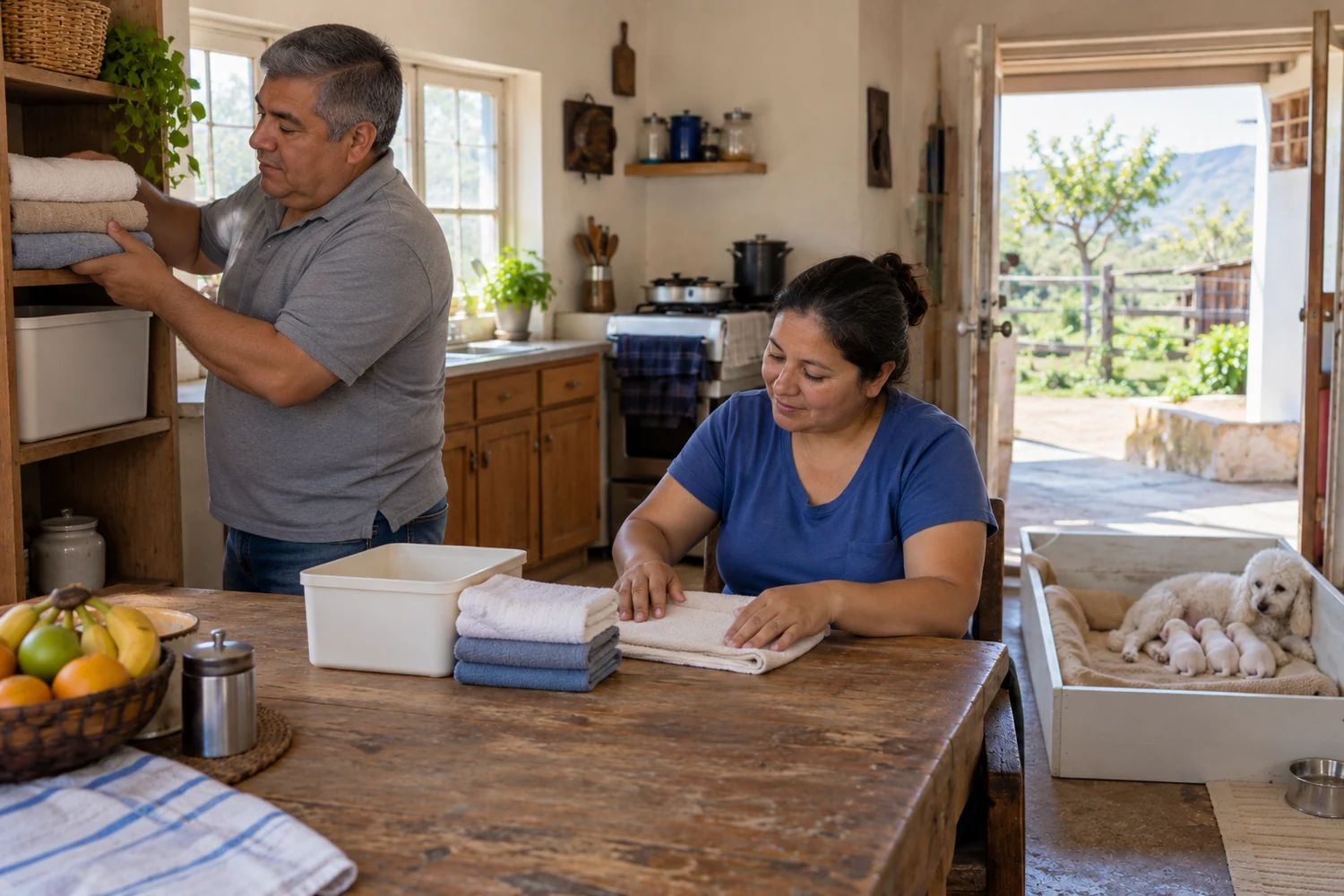
Include what worked well. Preserve the arrangement that made supplies easy to find or the handover that kept responsibility clear. Then choose the changes you can actually carry out: move the contact sheet, replace an unclear label or ask the clinic about an unresolved question.
Give each next action a person and a way to recognize that it is done. Keep clinical questions for the veterinarian. If a proposed change depends on an assumption, write the assumption beside it.
Store the review with its source records and keep sensitive personal information out of anything later shared with families. The aim is to make the next round of work easier to understand, not to produce a polished account for an audience.
Blank working sheet
A short litter review
Keep original notes. This review supports learning and organization; it is not a breeding-performance score or a causal diagnosis.
- Litter identity / review date / people present
- Event / time / original source
- What helped and should stay
- What was difficult / missing information
- Interpretation, clearly marked as tentative
- Question for veterinarian or other relevant person
- Next action / responsible person / completion evidence
- Correction added / date / author / original retained
Finished reading?
Keep track of the guides you’ve explored.
Follow the evidence
Sources & scope
- Royal College of Veterinary Surgeons · April 2026
Clinical and client records, chapter 13Sections 13.4 and 13.9: factual, timely records and dated attributable amendments retaining the original. UK veterinary-professional scope; editorial adaptation for this article.
- Tønnessen et al. · 2012
Canine perinatal mortality: a cohort study of 224 breedsTheriogenology 77, 1788–1801. Original full PDF inspected during collection research: Methods §2.2 and Table 1. Norwegian registered litters, 2006–2007; 10,810 litters and 58,439 puppies. Whole-litter deaths not reported. No rates or comparisons of breeding quality inferred here.