
Everyday litter care / Observation & notes
Describe changes in a puppy before trying to explain why
“Different today” is a useful beginning. A few concrete details make it something another person can understand.
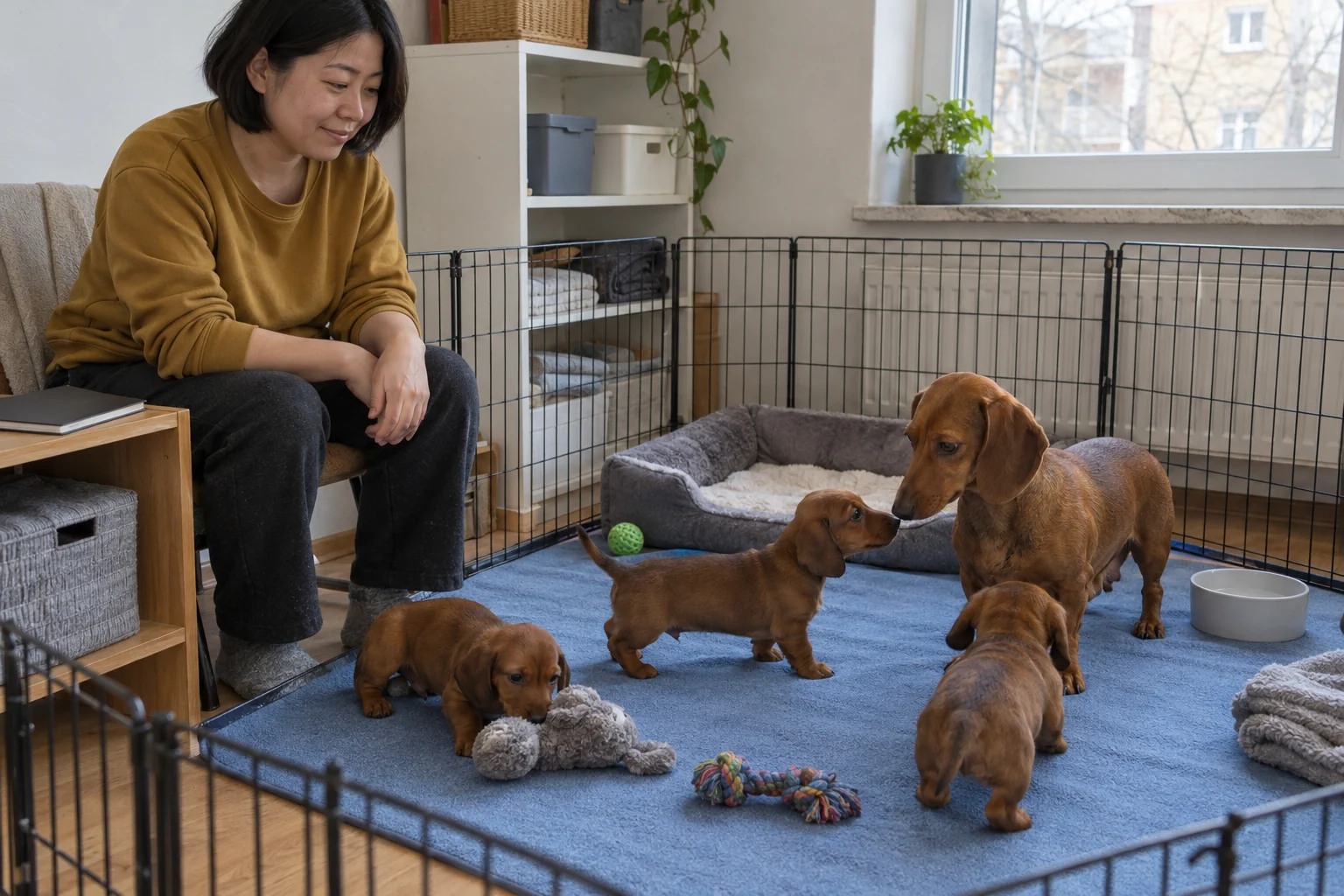
Write which puppy you mean, when you looked, what you saw and what was happening around it. Put your possible explanation in a separate sentence.
You know the litter well enough to notice a change before you have words for it. That familiarity matters. The next task is to make the observation clear to someone who was not there.
A useful note does not have to sound clinical. It needs enough detail to distinguish the puppy, the moment and the action. It also needs room for what you don’t know. The aim is to help a conversation, not to diagnose a problem by completing a form.
Describe the action you could see.
Begin with a plain verb. Standing, lying, approaching, moving away, eating, stopping and vocalizing describe actions. Words such as lazy, jealous, stubborn or dominant add an explanation that the action alone may not support.
Ask what another person would have seen from the same spot. Where was the puppy? What did it do? What happened immediately before or afterward? If you can only answer “it seemed off,” keep that concern and add the details you can genuinely remember.
AAHA’s veterinary behavior guidance emphasizes history and context and describes signs of anxiety or distress as nonspecific. A sign can matter without identifying its cause. Breeder notes can preserve observations for assessment; they do not replace that assessment. AAHA
Do not manufacture precision. If you did not time an event, do not give it an exact duration later. If a puppy was out of view, say so. “Not seen” and “did not happen” answer different questions.
Keep identity, time and context together.
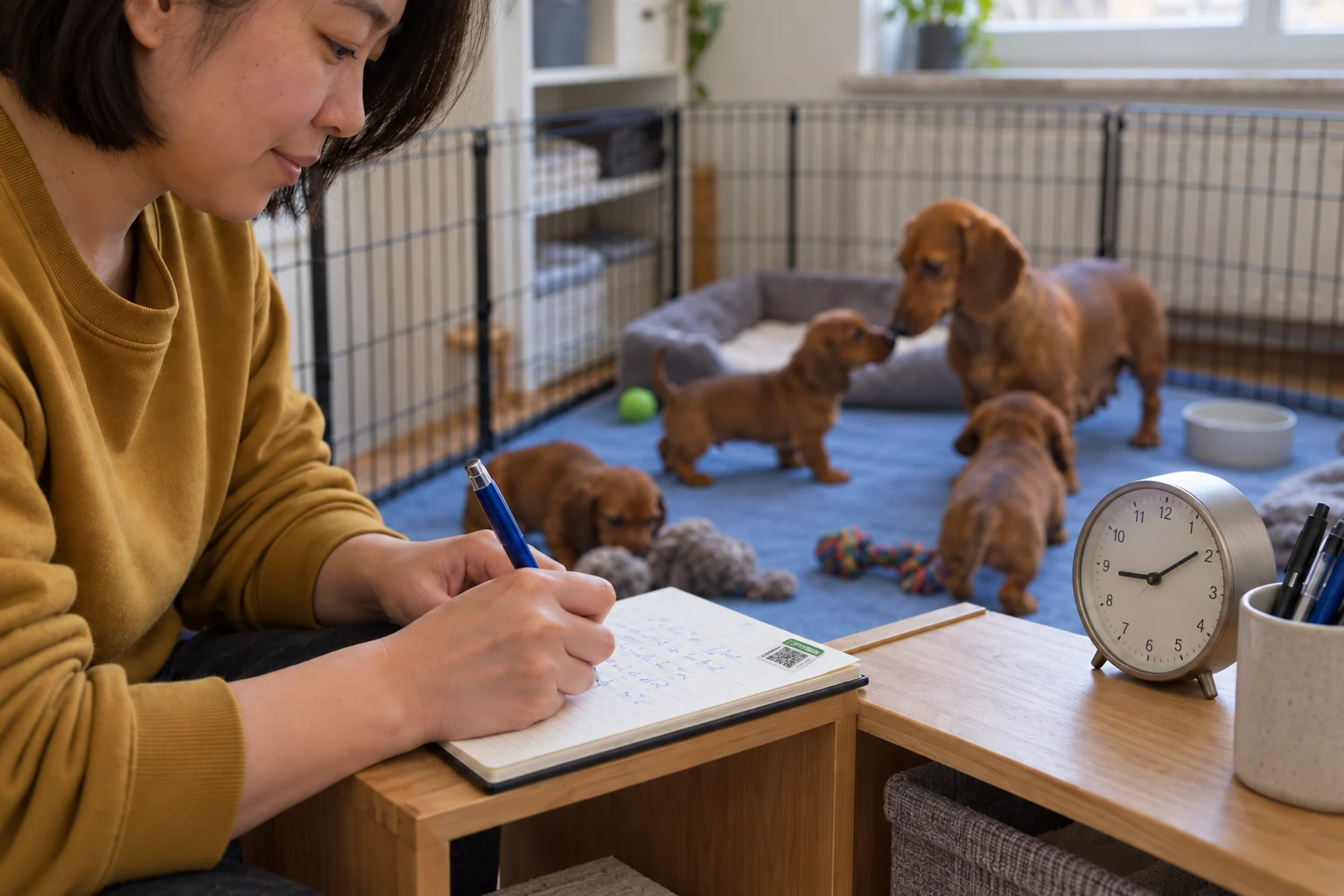
Use the puppy’s established name or ID. “The smallest one” can become ambiguous, especially when another caregiver reads the note. State the date and time, with enough context to make them clear later.
Then write what was happening around the observation: before a meal, after waking, while a visitor was present, during cleaning or in another ordinary situation. Include a recent change only if it actually occurred. Do not fill the background with possibilities that sound plausible.
A comparison helps when it compares like with like. The same puppy after waking yesterday is a different reference from an active littermate across the pen today. Explain which comparison you mean instead of calling one puppy “normal” and the other “different.”
If a measurement belongs in the note, retain its units and the circumstances under which it was taken. Do not add a number because an empty space looks unfinished. For a measured weight, use a proper weighing record and setup; this article is about the language surrounding an observation.
Several caregivers can each record what they directly saw. Add names or initials so a later reader can ask the right person. One person’s recollection should not silently become something everyone witnessed.
Give the possible explanation its own place.
Once you have written the observation, you may have a thought about why it happened. Keep it visible as a possibility: “I wondered whether…” or “This happened after…” does different work from “This was caused by…”.
An event occurring after another event does not, by itself, establish a cause. The note can preserve the sequence while leaving the explanation open. That is useful information, not an admission that the note failed.
Separate the action you took too. Moving an object, calling the veterinarian or changing the setting is something you did. Record it as such, including whose advice you followed where relevant. Then record later observations without forcing them to confirm the original guess.
If you discover an error, correct it clearly. Keep the earlier entry understandable rather than quietly rewriting the day’s story. A record that shows how information changed is often easier to interpret than one that looks improbably certain from the beginning.
Use the note to support the next conversation.
When speaking with your veterinarian, start with the concern and the concrete change. Keep the note available so identity, timing and details do not get lost while you talk. Ask what additional information would actually help, rather than collecting everything a form might allow.
If a puppy is unwell or a change concerns you, contact your veterinarian promptly. Do not wait to make a polished record or accumulate more observations before seeking help. Follow your existing veterinary instructions for urgent concerns.
A photograph or video may help communicate what was visible, but it also has a frame and a start and finish. Keep its date, subject and context with it, and describe what was outside the frame if that matters. A clip is part of the history, not the whole history.
For everyday handovers, the same discipline applies. Another caregiver should be able to tell what you noticed, what you did and what question remains. A short factual note can do that better than an impressive paragraph of guesses.
Keep a useful copy
A clear observation note.
Use the fields to keep what you saw separate from what you wonder. Leave unknown details unknown, and seek help when needed.
Optional notes stay in this page until you reset or reload it. Download a text copy to keep them. Nothing is sent or saved to an account.
Make uncertainty easy to see.
A clear note can contain a real concern and an unanswered question at the same time. Preserve the facts you have, label the possibilities, and give the next person something they can work with.
Finished reading?
Keep track of the guides you’ve explored.
Read further
Sources & scope
- AAHA · Incorporating behavioral assessments into every examination
2015 guidelines; web page May 10, 2019. Behavioral history, context and Table 1’s nonspecific signs. Written for veterinary assessment, not diagnosis from breeder notes or photos.