
Everyday litter care / Photos & communication
Take puppy photos that show more than a cute face
Keep the cute face. Add the rest of the puppy—and enough of the day to understand the picture.
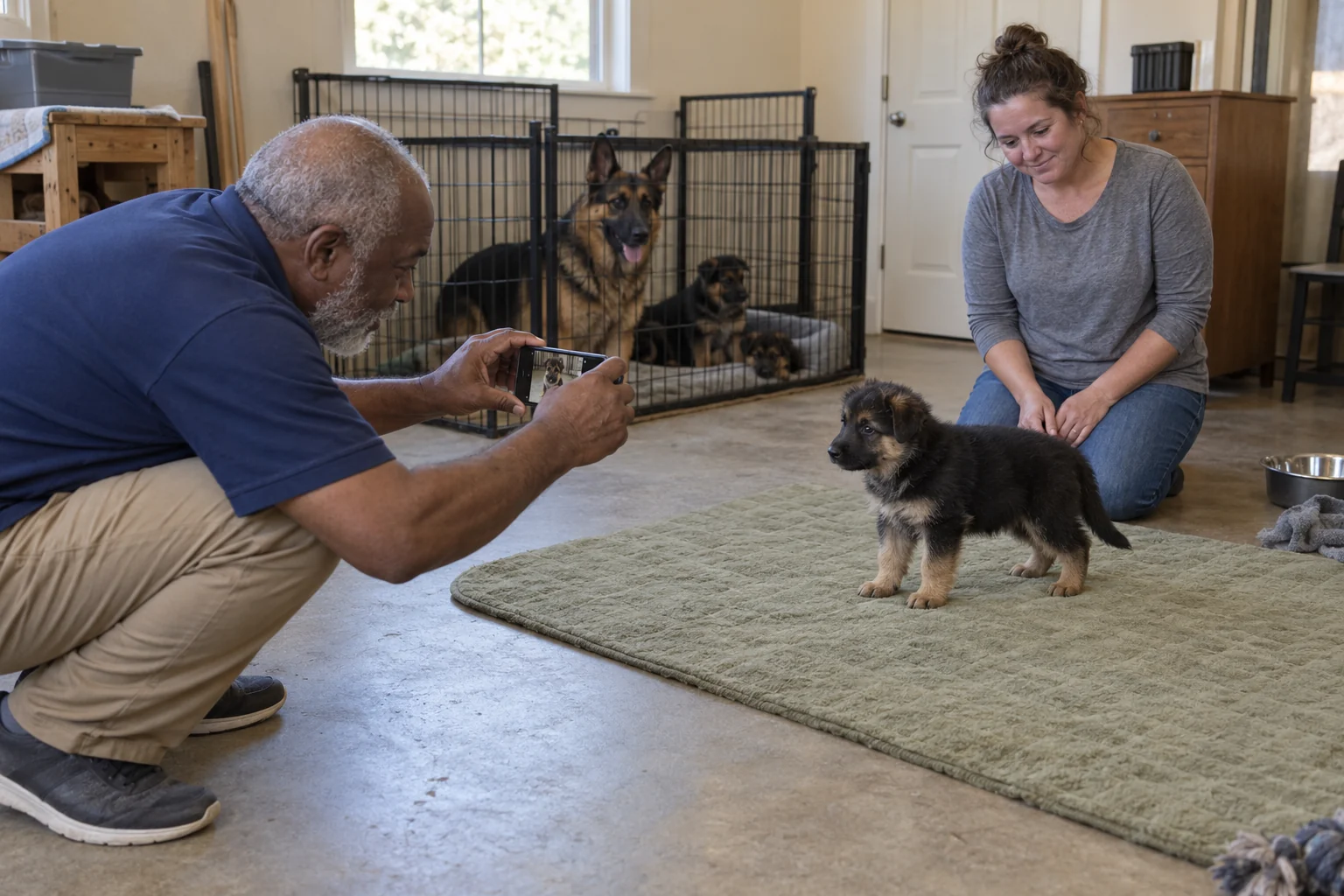
A small set of clear pictures can show a puppy more honestly than a dozen versions of the same close-up. Include the whole body, some ordinary activity and a little context.
The picture with the best expression is worth keeping. It just may not answer the family’s other questions: how big is this puppy now, which puppy is it, and what was happening?
Think of the selection as a short visual update. Give each photograph a different job, keep its date and identity attached, and stop taking pictures when the puppy needs something else. Good communication does not require a studio.
Give each picture a useful job.
Start with a whole-puppy view. Leave room around the body rather than clipping off feet, ears or tail. A naturally standing or resting puppy on a secure surface gives the family more to look at than a face filling the screen.
Add a closer view where features are clear, then a picture of ordinary activity. That might be investigating a suitable toy, moving through a familiar space or resting with littermates. A wider frame can show the surroundings and help the viewer understand scale.
You do not have to obtain every view in one sitting. These are choices for a useful selection, not a performance the puppy must complete. If several images communicate the same thing, choose the clearer one and leave room for another kind of moment.
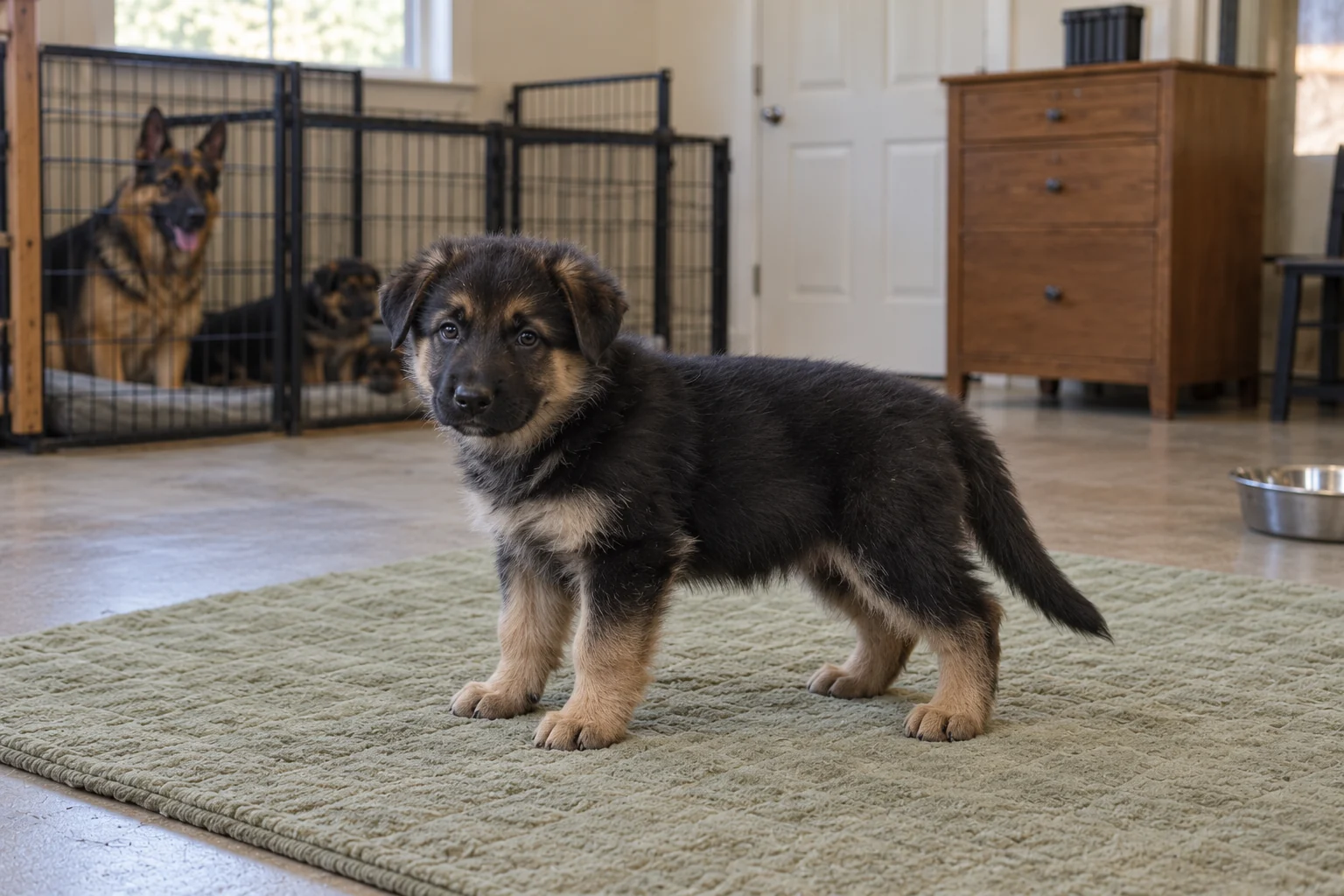
Make the picture easier without making the task bigger.
Use an ordinary safe place the puppy can already be in. Check what is within reach before lifting the phone. A cable, an open door or a precarious perch is a poor trade for a cleaner background.
Move yourself when possible. Getting lower can make a useful view without repositioning the puppy. Give your hands a steady place, leave some distance and check that the animal is actually in focus. A phone can focus beautifully on the pen bars while the intended subject becomes a small blur.
Notice the light. A normal window may be enough; try a position where the puppy is visible rather than a silhouette against it. Keep the setting recognizable. There is no need to hide every piece of practical furniture behind a miniature photo shoot.
With a helper, agree who watches the puppy and who takes pictures. Avoid calling, handling and repositioning all at once. Maxwell’s explanation of social experiences emphasizes responding to the puppy rather than pushing exposure; that principle is useful when the camera becomes another demand. Maxwell
Take a break when the puppy needs one. Do not hold it in a pose, chase a retreating puppy for a frame or wake it to complete the set. The missed picture can remain missed.
Keep the date and the moment with the image.
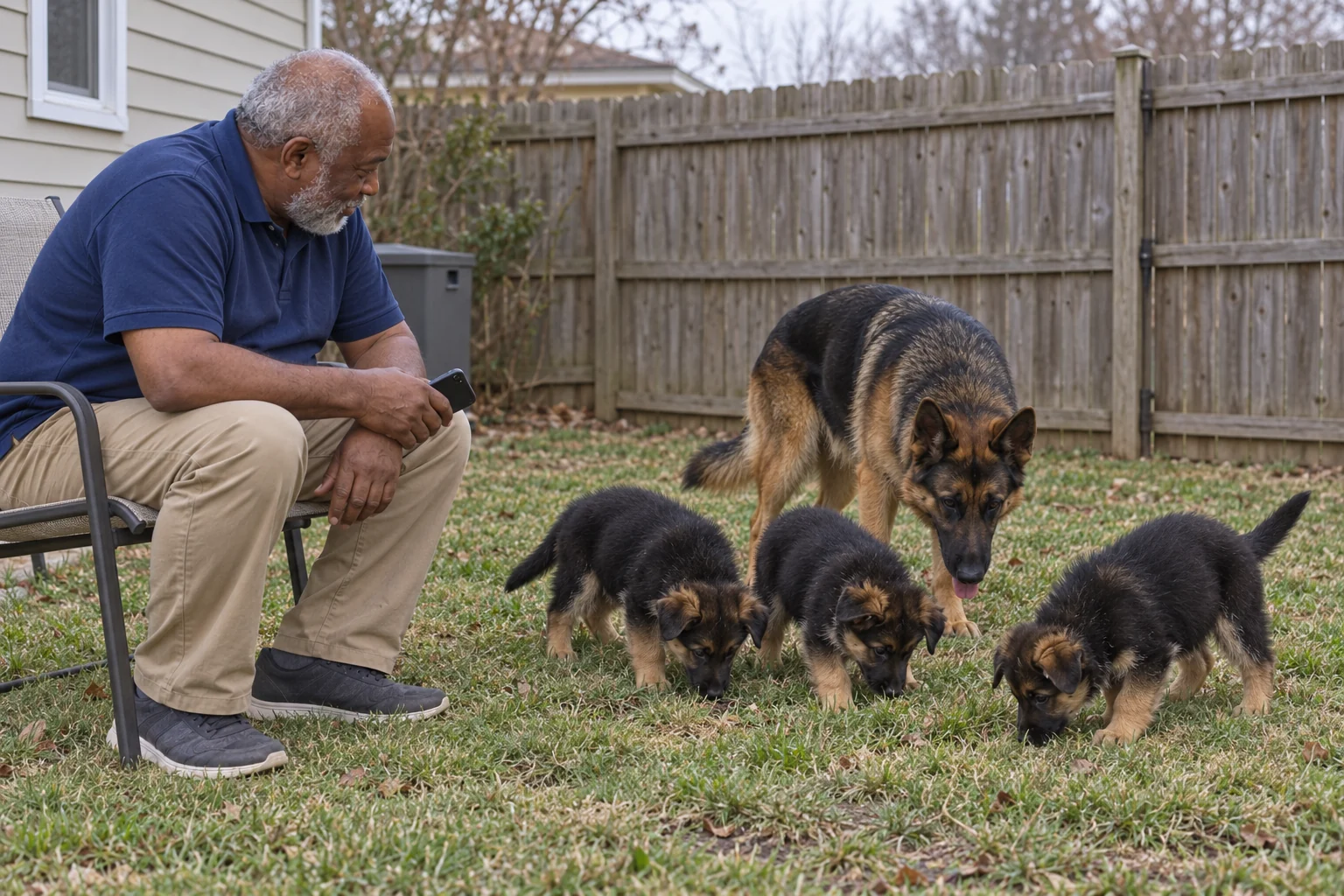
Before sharing, confirm the puppy’s identity and the date. Similar littermates and a full camera roll are a persuasive argument for doing this while the day is still fresh. If the image shows several puppies, explain which one you are referring to.
Use a short caption about what was happening, rather than a claim about lifelong character. “Exploring the yard” describes the pictured activity. “Fearless future adventurer” asks one frame to predict a great deal.
AAHA’s guidance uses history and context in veterinary behavioral assessment. A photograph cannot supply that whole assessment. Separately, Riemer and colleagues studied structured tests in Border collies across development—not a photo method. Their work illustrates how much richer the research question is than judging an adult personality from a puppy picture. AAHA Riemer and colleagues
A photo does not certify health, future temperament or breeding quality. If a family asks one of those questions, answer with the relevant records, observations and professional input rather than using an appealing frame as proof.
Keep a useful copy
Prepare a useful photo update.
Use the blank fields to plan a small selection and review what the family will receive. It is fine to leave a view for another day.
Optional notes stay in this page until you reset or reload it. Download a text copy to keep them. Nothing is sent or saved to an account.
Choose a small, honest update.
A useful selection gives the family something clear to see and enough context to understand it. The best expression can stay; it no longer has to tell the whole story.
Finished reading?
Keep track of the guides you’ve explored.
Read further
Sources & scope
- AAHA · Incorporating behavioral assessments into every examination
2015 guidelines; web page May 10, 2019. Behavioral history, context and Table 1’s nonspecific signs. Written for veterinary assessment, not diagnosis from breeder notes or photos.
- Megan E. Maxwell · Socialization is more than mere exposure
AVSAB, July 5, 2017. Professional explanation of observing responses and pacing experiences; not a controlled trial.
- Riemer and colleagues · Early behavioral assessments
PLOS ONE 2014, 9:e101237. Longitudinal Border collie research: 99 neonatal tests, 134 puppy tests and 50 adult follow-ups in overlapping groups. Structured tests, not a study validating photographs.