
Change the distance.
Let an ordinary household sound happen farther away. Keep a quieter place available.
If the puppy withdraws: stop the exposure. Don’t turn the volume up to “get it over with.”
Growing up in the human world
The doorbell, the kitchen floor, a quiet visitor. Ordinary life gives you plenty to work with—when you let the puppy set the pace.
A broader kind of learning
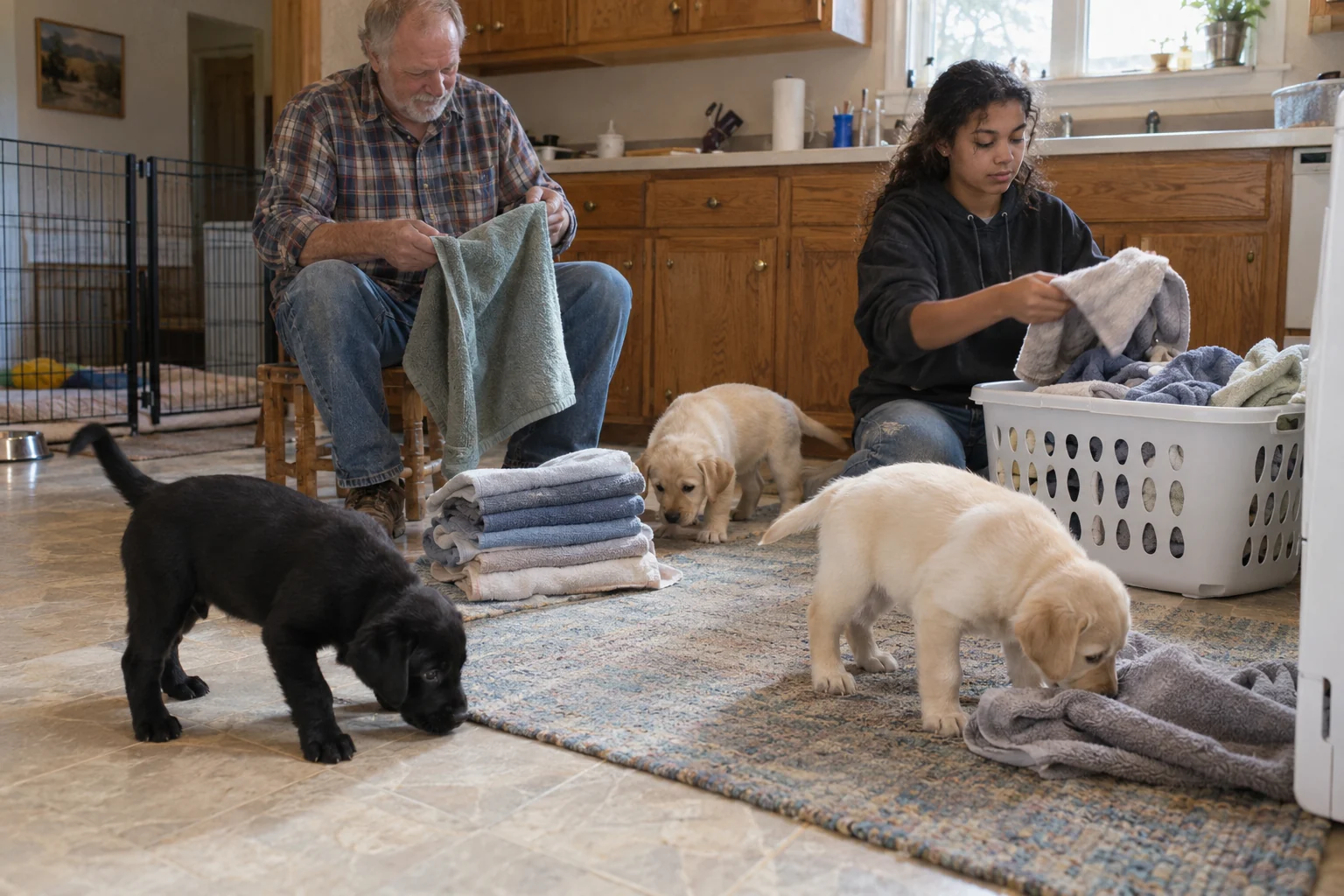
You can welcome ten lovely visitors and still miss a lot of what a family dog will encounter. A washing machine changes its rhythm. The floor feels different beyond the rug. Someone puts on a coat and suddenly looks twice as wide. None of these things needs to become a big event.
Socialization includes learning about people and other animals, but also the environments and everyday situations around them. The aim is to help puppies become familiar with life in a way they can cope with. A crowded room full of willing puppy cuddlers isn’t automatically a better lesson than one quiet person sitting nearby. UC Davis ↗
Ask “What was that experience like for this puppy?”
before “How many things did we cover?”
Early life matters. AVSAB calls the first three months the most important period for socialization and recommends varied experiences that can happen safely, without excessive fear, withdrawal or avoidance. That last part belongs in the plan, right beside the variety. Learning continues afterward, too; you don’t have to treat a birthday as a door slamming shut. AVSAB position statement ↗
For you as a breeder, that means making space for the ordinary: people moving around the house, comfortable footing, gentle care and a place to rest. You’re beginning an ongoing process. You’re not issuing a lifetime guarantee that a puppy will love every person, dog or noise.
Less production. More attention.
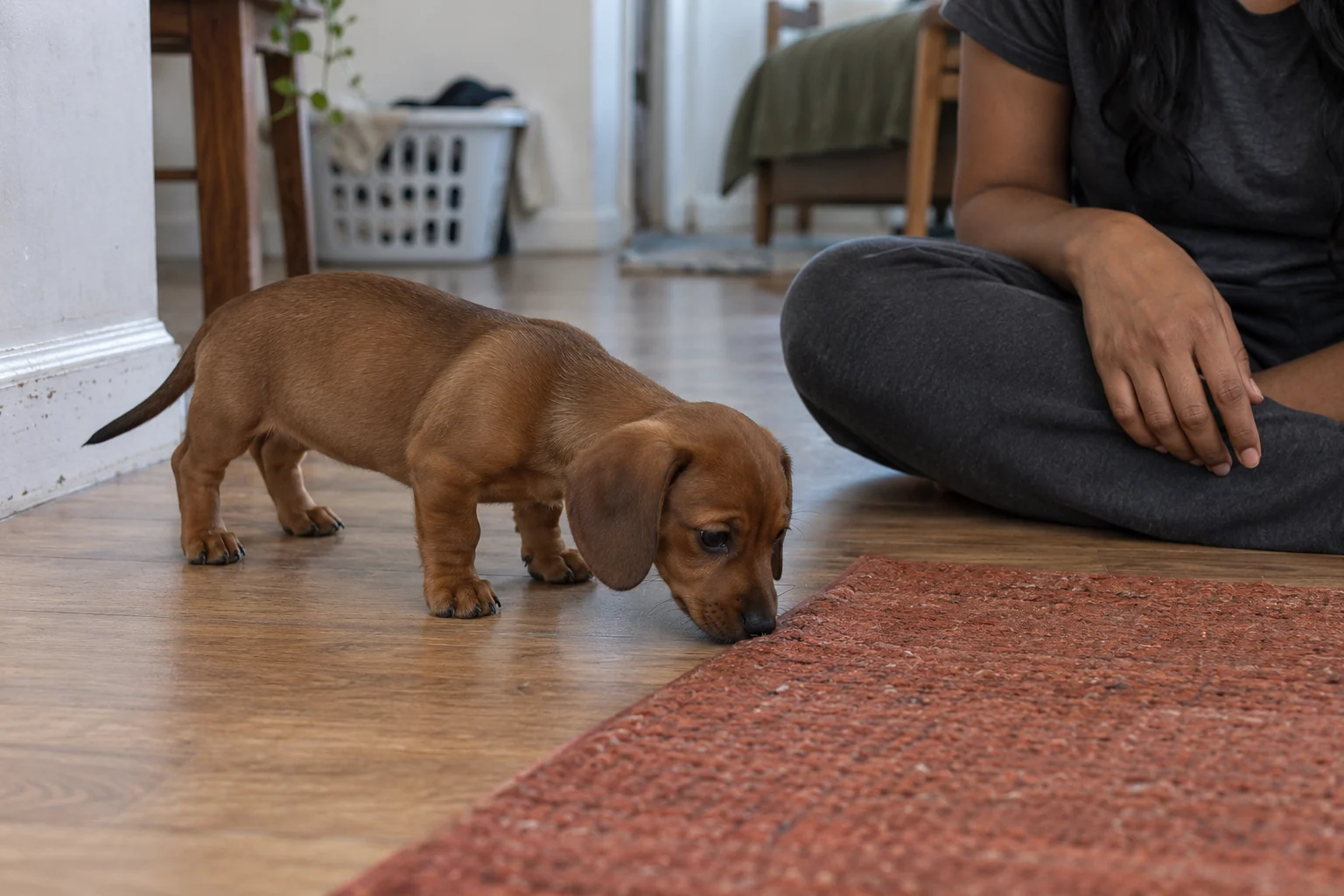
Start with something you can adjust. A person can sit farther away. A sound can be quieter. A new surface can sit beside familiar footing, with a clear way back. You don’t have to add movement, sound and a new visitor all at once.
Keep encounters brief and positive. You can pair them with something the puppy enjoys—appropriate food, play or gentle attention—without using a reward to pull a reluctant puppy closer. Watch what happens, and be ready to stop. UC Davis ↗ AAHA ↗
Keep beside the puppy pen
Let an ordinary household sound happen farther away. Keep a quieter place available.
If the puppy withdraws: stop the exposure. Don’t turn the volume up to “get it over with.”
Offer a small, stable, nonslip surface beside the one the puppy already knows.
If the puppy backs away: leave room to retreat. Don’t place the puppy onto it to finish a task.
Ask one person to sit quietly, with hands to themselves and space for a puppy to approach or leave.
If the puppy avoids contact: the visit can end without a cuddle. Nobody loses points.
Practical applications of positive, controlled exposure and avoiding forced interactions. UC Davis · AAHA
Think about the things likely to be ordinary in a family’s home: shoes crossing a floor, people wearing different clothes, a brush nearby, a carrier being prepared. You can offer variety without making every day a festival of novelty. The BSAVA PetSavers guide makes the same practical point: introduce the experiences a puppy is likely to encounter later, and allow approaches in the puppy’s own time. BSAVA PetSavers ↗
Health precautions shape where and how this happens. Ask your veterinarian which settings and contacts are appropriate for your puppies and local infection risks. AVSAB supports safe socialization before the vaccine series is complete, with conditions for classes, and advises avoiding unsanitized areas heavily used by dogs of unknown health status. That’s a reason to plan carefully, not to take every puppy everywhere. AVSAB ↗
A look at the published data
A 2025 Australian survey asked breeders how often puppies encountered different experiences at five to eight weeks. Household noise and surfaces were reported more often than unfamiliar people or grooming. The chart shows six selected experiences from that survey; it tells us about reported practice, not which schedule produces the best adult dogs. Dawson et al., Table 6 ↗
200 participating Australian breeders · puppies aged 5–8 weeks
How often breeders said puppies encountered each selected experience

Counts from the seven original categories are grouped below. All percentages are counts ÷ 200 × 100; missing answers are retained.
| Experience | Never | Less than weekly | Weekly | Daily | No answer |
|---|---|---|---|---|---|
| Household noises | 2 (1%) | 12 (6%) | 27 (13.5%) | 157 (78.5%) | 2 (1%) |
| Outdoor surfaces | 1 (0.5%) | 11 (5.5%) | 51 (25.5%) | 137 (68.5%) | 0 (0%) |
| Indoor surfaces | 4 (2%) | 24 (12%) | 51 (25.5%) | 119 (59.5%) | 2 (1%) |
| Diverse humans | 2 (1%) | 55 (27.5%) | 115 (57.5%) | 28 (14%) | 0 (0%) |
| Human apparel | 12 (6%) | 64 (32%) | 86 (43%) | 38 (19%) | 0 (0%) |
| Bathing / grooming | 2 (1%) | 62 (31%) | 106 (53%) | 28 (14%) | 2 (1%) |
Download original category counts (CSV) · Download chart percentages (CSV)
The puppy gets a say
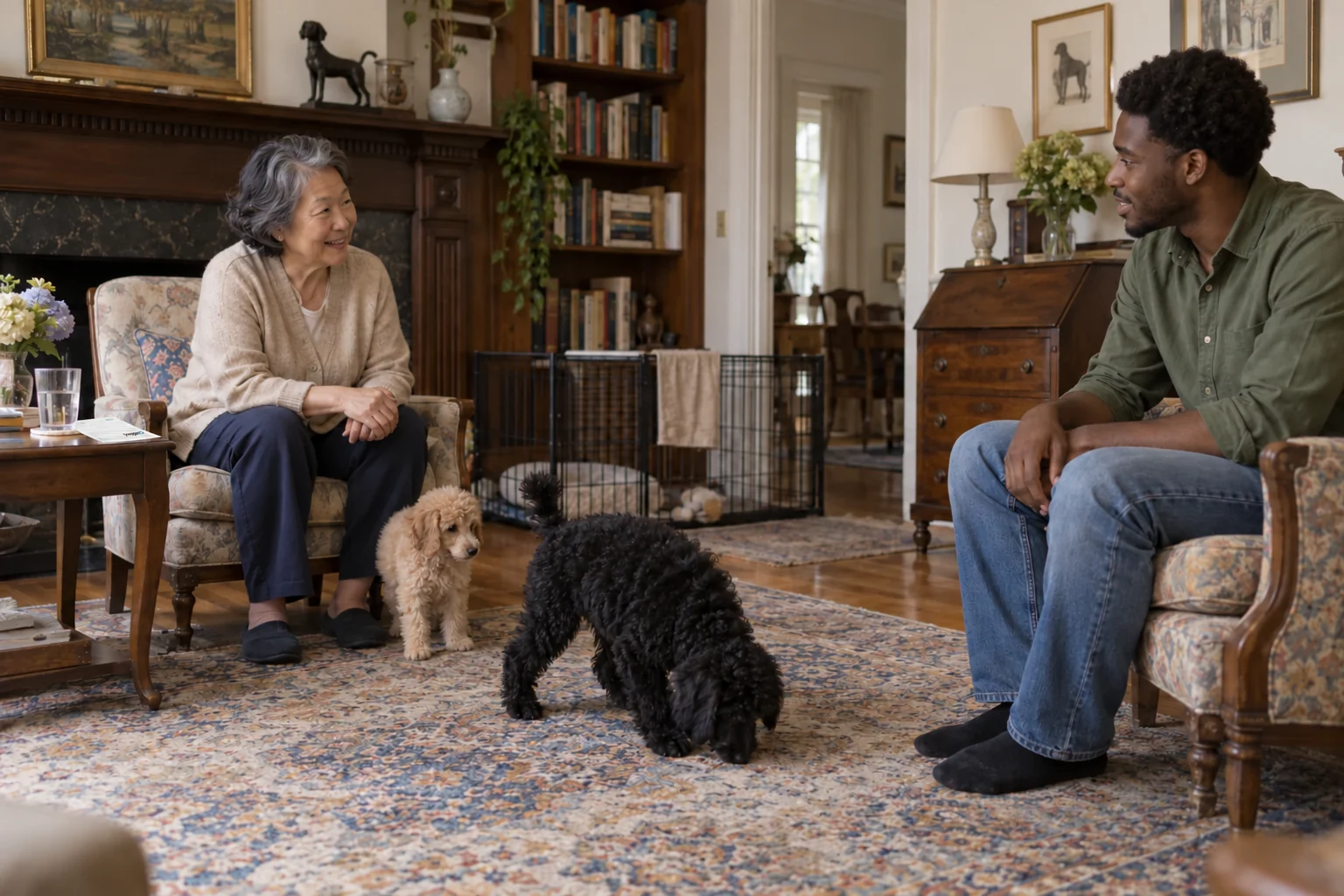
If a puppy begins withdrawing, freezing or trying to escape, stop adding pressure. End the encounter and give the puppy space in a familiar, quieter area. You don’t need to complete the greeting, cross the surface or keep a sound going for the lesson to “count.” AAHA warns that forced exposure can worsen fear and recommends veterinary guidance when a dog withdraws or shows fear. AAHA ↗
Read what happens over time and in context. One yawn, a turned head or a photograph won’t tell you everything about how a puppy feels. Note the activity, the surroundings and what changed. If fear keeps recurring, seems marked, or you notice a sudden change in behavior, talk with your veterinarian rather than trying bigger exposures.
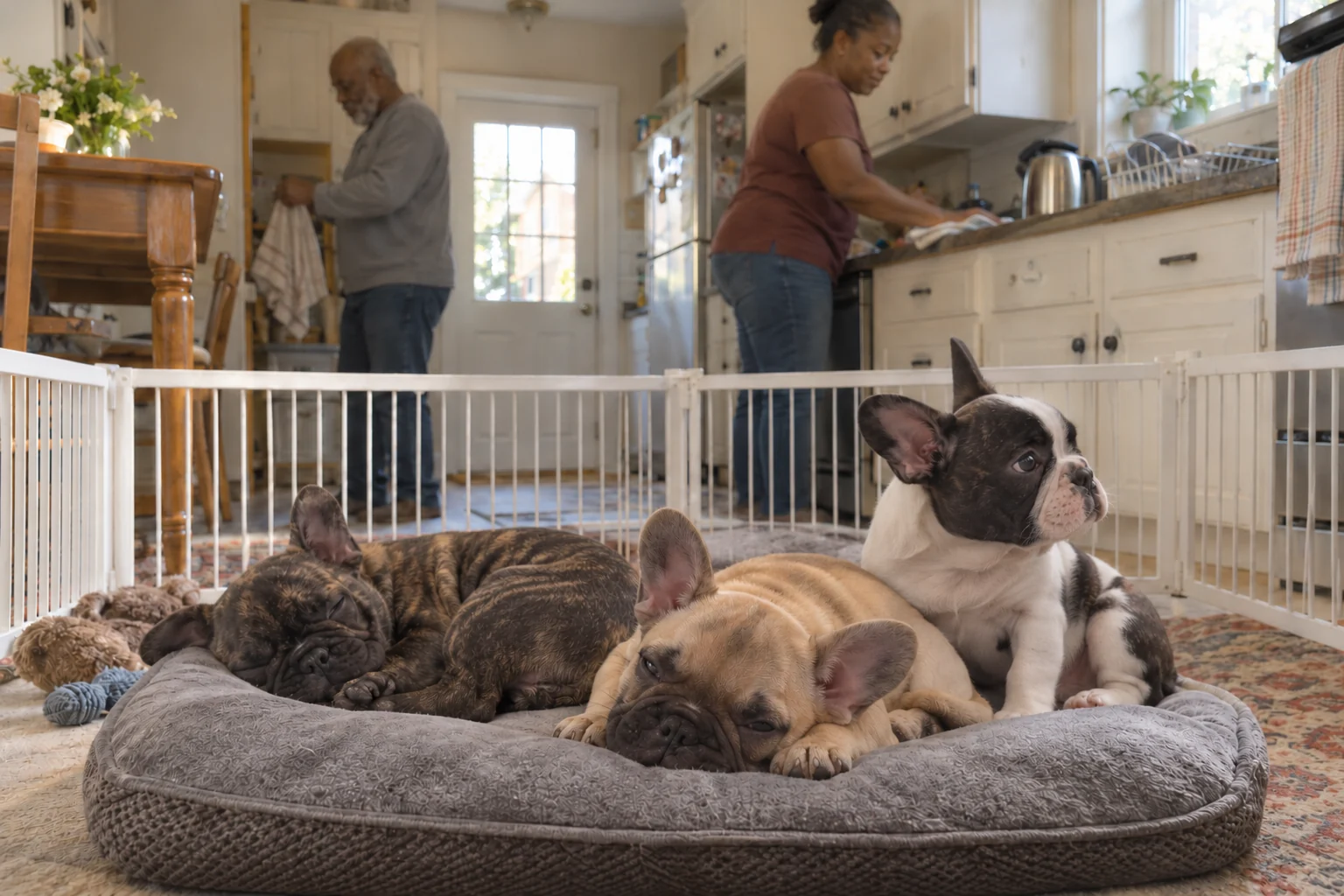
Rest also belongs here. A quiet place to nap is part of a thoughtfully arranged puppy environment, not unused time you should fill with another activity. AVSAB ↗
A little detail goes further than a tick
“Met a visitor” leaves out most of the useful information. A short note can capture who was there, how close they were, what the puppy did and what you changed. You can return to those details when deciding what to offer next or explaining the puppy’s experience to a family.
Describe actions you could see. “Walked away when the person reached down” is more useful than “shy puppy.” A note isn’t a temperament verdict, a score or a care prescription.
Use the blank sheet on paper. It’s a reminder to observe, not a quota to fill.
Good Harbor · Observation sheet
Recurring fear or a marked change? Ask your veterinarian.
Download an editable text copyFollow the evidence
©2008 position statement, currently linked from the AVSAB library. pp.1–2: early experiences, health precautions, positive training and rest. The PDF’s upload folder is dated 2024; the statement is not.
Claire Youngerman, April 10, 2019. An accessible explanation of positive, controlled experiences and environmental variety.
2015 Canine and Feline Behavior Management Guidelines; web publication 2019. Individual development, ongoing learning and avoiding forced exposure.
Animals 15:2302 (2025). Self-selected Australian survey, 200 included respondents. Table 6, p.12 supplies the chart counts, with missing answers retained.
Animals 12:2895 (2022). Narrative systematic review of 29 studies. Study designs and outcome measures vary; an optimal universal amount remains uncertain.
Animals 12:3067 (2022). Within-litter controlled study in 83 puppies from 12 litters; 67 owner questionnaires at six months. Methods, Tables 8–12 and limitations inform the discussion.
2015 booklet, p.8. Likely-life experiences and allowing a puppy to approach in its own time. Ask your veterinarian about appropriate local health precautions.
Aly Cohen, extension veterinarian, February 2026. Further reading on voluntary participation, gradual handling and stopping early.
Sources checked October 10, 2026.
Finished reading?
Keep track of the guides you’ve explored.