
AVSAB · On Puppy Socialization
©2008 position statement, pp.1–2. The 2024 upload path is not the statement date. Early learning, positive experiences, health precautions and rest.
Preparing for everyday life
Start with an ordinary Tuesday. The most useful experiences are often the ones already waiting in a puppy’s future home.
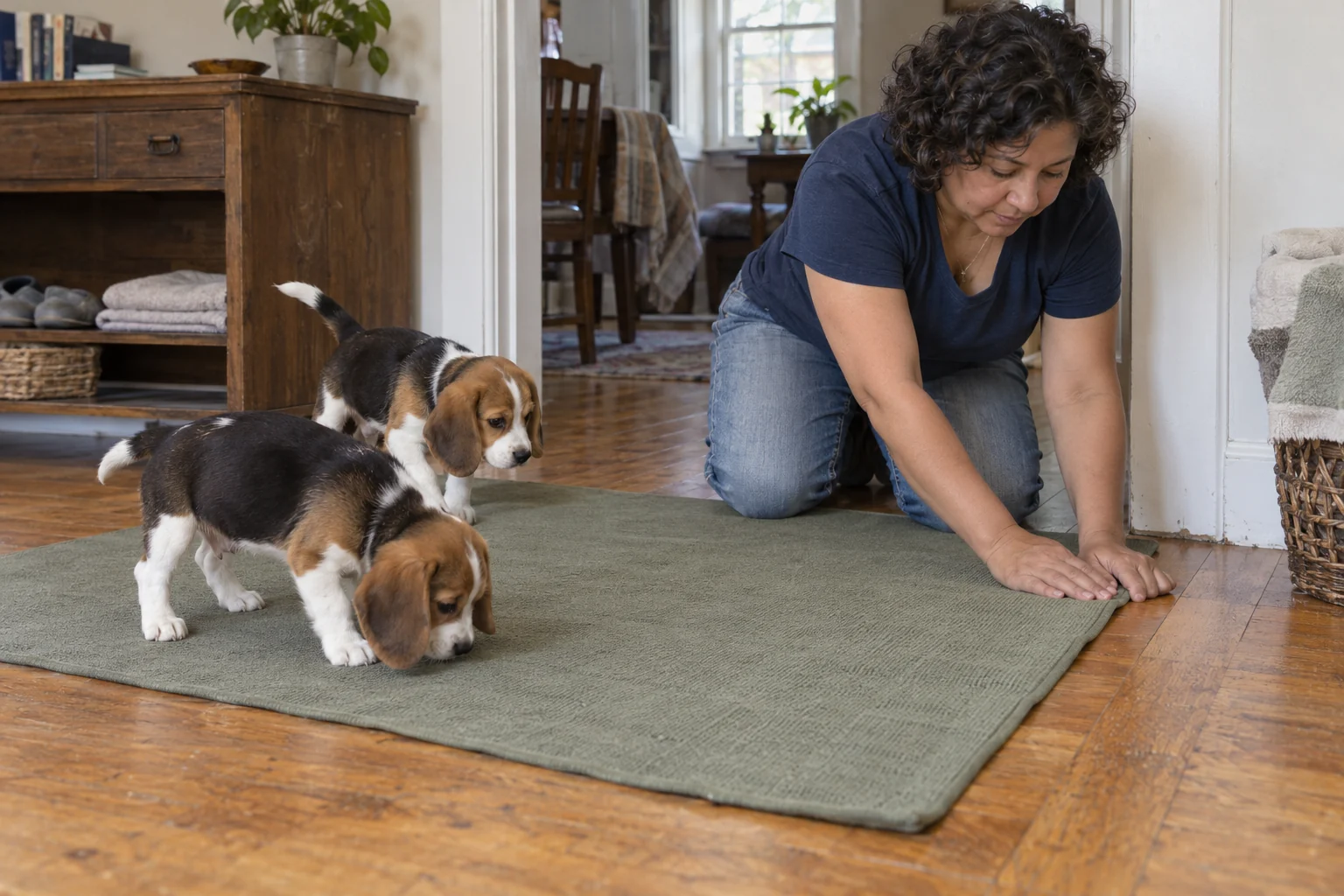
Choose what matters
A useful list begins with questions. Will this puppy live above a busy street, beside a quiet garden, or in a house where the washing machine seems to run all day? Will regular visitors wear boots, carry bags or use mobility equipment? What care will the dog need? You don’t need an elaborate training facility to start thinking clearly about those things.
Professional guidance includes people, sounds, footing and other parts of the environment in early learning. The BSAVA puppy booklet also encourages experiences a dog is likely to meet later. That gives you a practical way to choose: begin with the future household, then look at what you can introduce safely where the puppies already live. UC Davis ↗ BSAVA PetSavers ↗
Ask families about daily life without turning the conversation into an entrance exam. A small apartment and a large property both contain useful experiences. Their lists will differ. You’re looking for relevant information, not the household with the longest list of activities.
Make the list useful
“Household sounds” can mean almost anything. “A person moving a laundry cart across the far end of the room” tells another caretaker what you have in mind. The more concrete description also makes it easier to change one part of the experience.
These categories organize a conversation. They are not five boxes every puppy must complete in one session. Some introductions need more preparation, and some will not be appropriate in your setting at all.
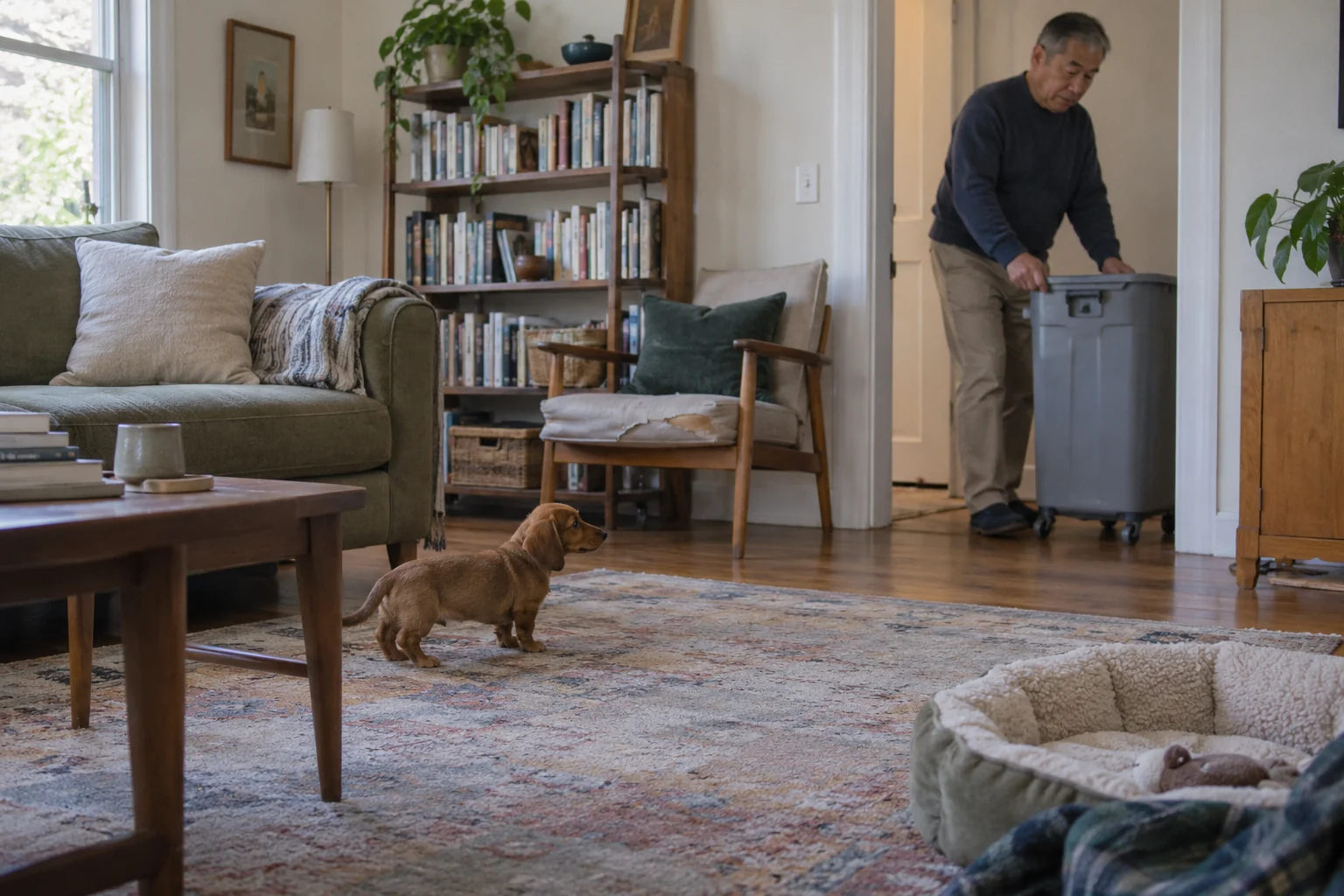
Choose the starting point
A visitor can sit quietly before anyone reaches toward a puppy. A household object can be present before it moves. A new mat can meet familiar flooring at a level edge. The useful question is what the puppy will actually encounter, and how easily you can make that encounter smaller.
Keep track of the whole scene. A new floor, a noisy appliance and several arriving visitors add up to a different experience than any one of them alone. If the puppy begins withdrawing, freezing or trying to escape, stop adding pressure. AAHA cautions against forcing social exposure. AAHA ↗
There is no need to make your list longer every day. Keep descriptions of what happened, including occasions when you stopped or changed the plan. Those notes are more informative than a checkmark labeled “done.”
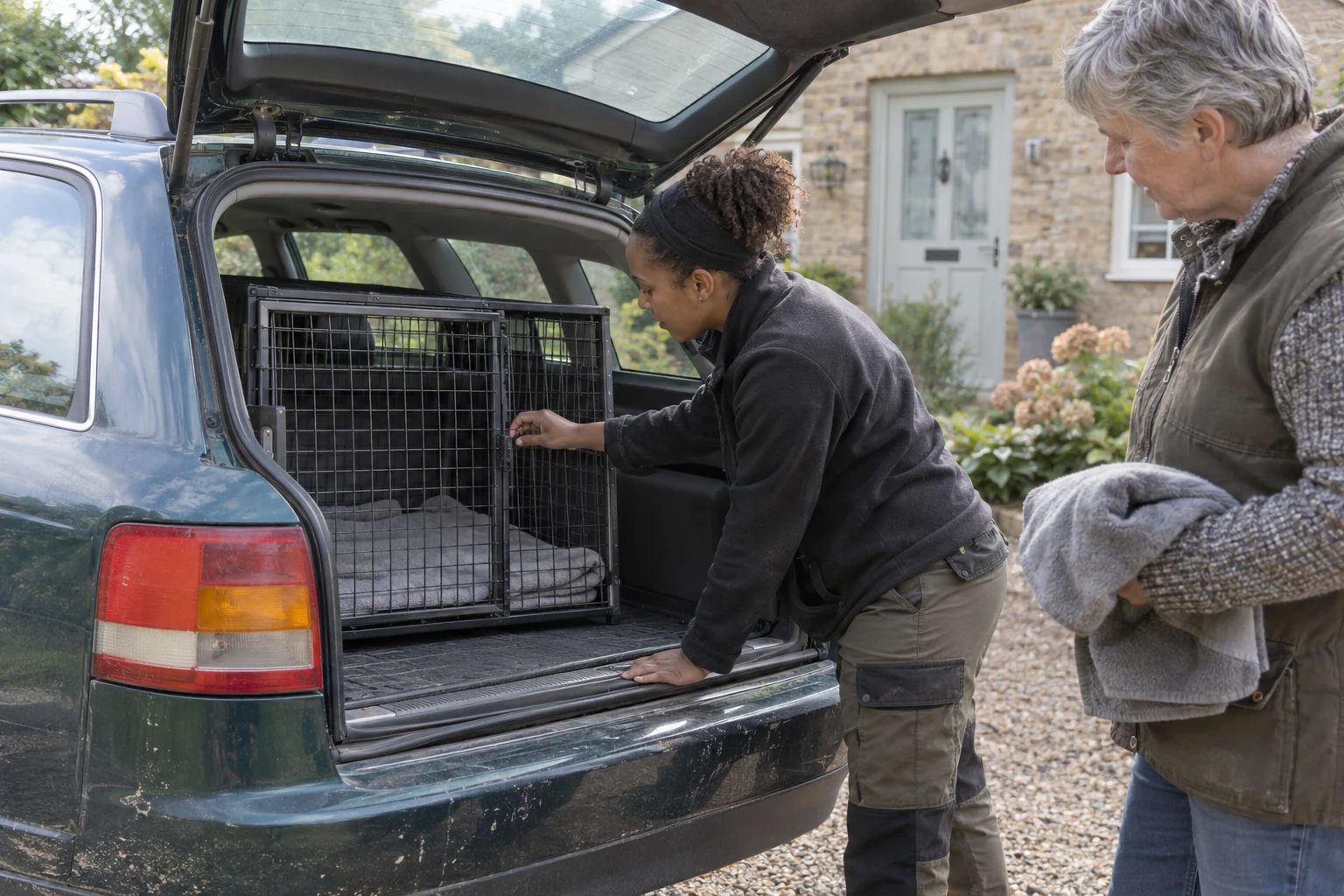
Some choices need advice
A destination may be useful and still need health precautions. Ask your veterinarian about local infection risk, vaccination status and suitable access for your puppies. AVSAB supports carefully managed early learning alongside health precautions; its statement does not make every place suitable for every puppy. AVSAB ↗
For travel, separate preparing appropriate equipment from introducing a puppy to it, and both from an actual journey. Follow the equipment manufacturer’s fit and securing instructions and get advice on safe transport.
Share the relevant details with the family: what was introduced, under what conditions, and what you observed. “Has met everything” is a hard promise to keep. A clear description gives the next person something useful to work with.
Make a short working list
The sheet asks about everyday life and the adjustments you may need. Leave out experiences you cannot arrange appropriately. Add questions for the veterinarian rather than guessing at health access.
Return to the list as you learn more about the puppy and the household. A change of plan is useful information, too.
Blank working sheet
A conversation aid, not a required exposure schedule.
Download an editable text copyFollow the evidence
©2008 position statement, pp.1–2. The 2024 upload path is not the statement date. Early learning, positive experiences, health precautions and rest.
Claire Youngerman, April 10, 2019. Positive, controlled experiences with people and everyday environments.
2015 booklet, p.8. Experiences relevant to future life; voluntary approach. Local health precautions need veterinary advice.
2015 Canine and Feline Behavior Management Guidelines; web publication May 10, 2019. Individual development, fear and avoiding forced exposure.
Sources checked October 10, 2026.
Finished reading?
Keep track of the guides you’ve explored.